
THE WALLAROO
“… it was decided to form a football club, the euphonious name of Wallaroo being unanimously adopted …”
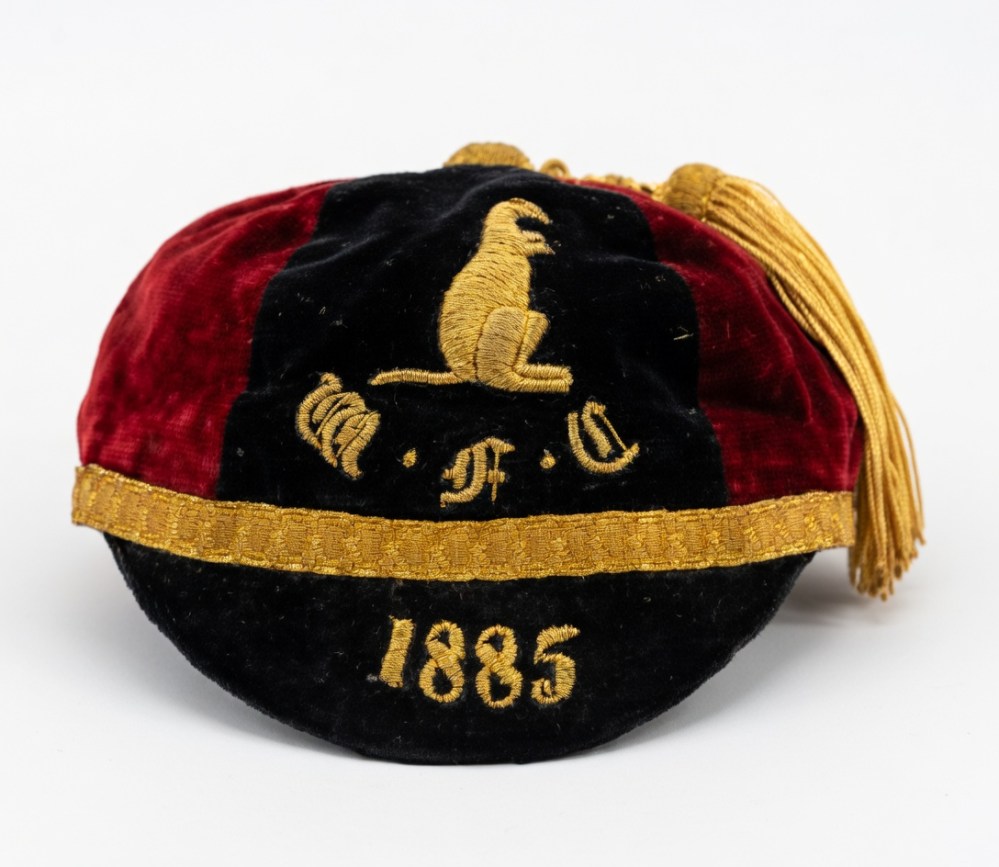
Adopted unanimously at the club’s 1870 founding meeting, the name Wallaroo was selected for its “euphonious,” pleasing sound and sophisticated, scientific air.
Mirroring the elite, member-based subscription clubs of London like Blackheath and Richmond, Wallaroo FC was built to draw gentlemen from across Sydney based on sporting merit and social standing.
While the kangaroo and wallaby were already well-known and common symbols in trade, the relatively obscure wallaroo offered a distinct, rhythmic identity that gave the pioneering club the air of a more knowledgeable and prestigious edge.
The choice also provided an edgier, exotic mascot that perfectly matched the rugged, dangerous nature of early Rugby. Known to early settlers as the powerful “devil of the rocks,” the Eastern Wallaroo’s tough character was far more evocative than the generic names of rival teams. The Sydney press fondly dubbed the side “The Marsupials”—and later, the “historical marsupials” as the club outlasted its short-lived peers.
Though match jerseys never featured an official badge, the iconic silhouette adorned honorary presentation caps, with some players even taking the field with large wallaroos hand-stitched onto their chests.
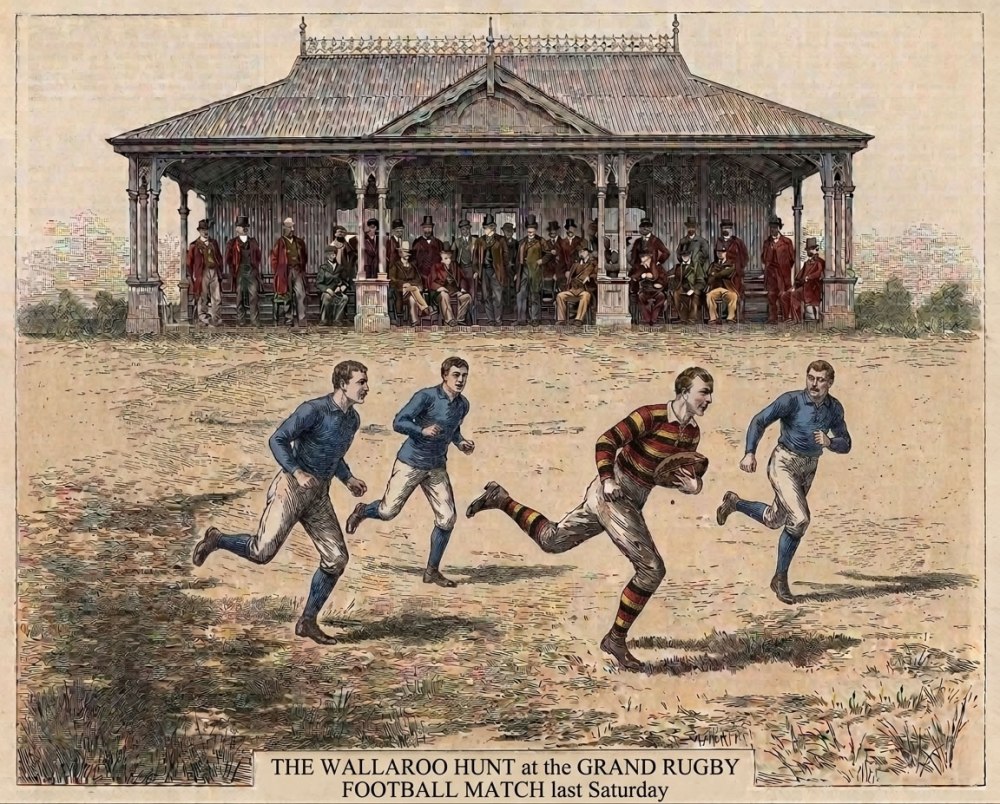
THE ‘WALLAROO’ NAME was adopted at the Wallaroo FC‘s founding meeting. As told by ‘Monty’ Arnold, one of the five men present:
“After waiting for some time to ascertain if any others would turn up, we determined to proceed to business, and, at that meeting, of five individuals it was decided to form a football club, the euphonious name of Wallaroo being unanimously adopted.”
— ‘Monty’ Arnold, Old Times, July 1903
The Founding & The “Euphonious” Choice
The Wallaroo Football Club was established to attract Sydney’s gentlemen Rugby footballers, as well as those newly arrived from Britain of suitable social standing and athletic prowess. In both structure and ethos, it deliberately mirrored the prestigious subscription-based rugby clubs then thriving in London, such as Blackheath and Richmond.
As co-founder ‘Monty’ Arnold later recalled, the name “Wallaroo” was chosen unanimously for its euphonious quality—a Victorian virtue prized for its harmonious, pleasing cadence. It aligned perfectly with the era’s fondness for rhythmic, three-syllable identities, drawing a direct stylistic parallel to London’s famed Har-le-quins.
This choice reflected a broader Victorian custom of transforming literal geographic locations into colourful, abstract club identities. The trend had gained momentum when Blackheath FC (originally the “Old Blackheathens”) became colloquially known as the “Black Heathens”—a witty geographic pun. Soon after, numerous London clubs abandoned strict place names in favour of evocative monikers like the Wasps and Saracens.
While the kangaroo was already a ubiquitous national emblem and the wallaby well-known, the wallaroo was a bolder choice. It was darker, rarer, and carried an almost scientific mystique—signalling a sophisticated, deeper familiarity with Australian fauna.
Devil of the Rocks
In the Sydney basin, the Eastern Wallaroo (Osphranter robustus robustus) is a powerfully built marsupial with a coat ranging from slate-grey to soot-like charcoal. To early European settlers, the creature possessed a gargoylish quality—a “Devil of the rocks” that haunted rugged terrain and perched haunched on stone ledges.
Adopting this name and mascot gave the club a fierce, exotic edge that matched the bruising, dangerous game of Rugby they intended to play. It was far more evocative than the plain moniker of “Sydney”—a name already tainted by two failed predecessor clubs and used by the University team.
In true Victorian fashion, the founders extended this allegory into a clever visual pun. By adopting the dark-furred “blacker than the Devil of Hell” wallaroo, they created a distinctly Australian echo of Blackheath’s “Black Heathens.”
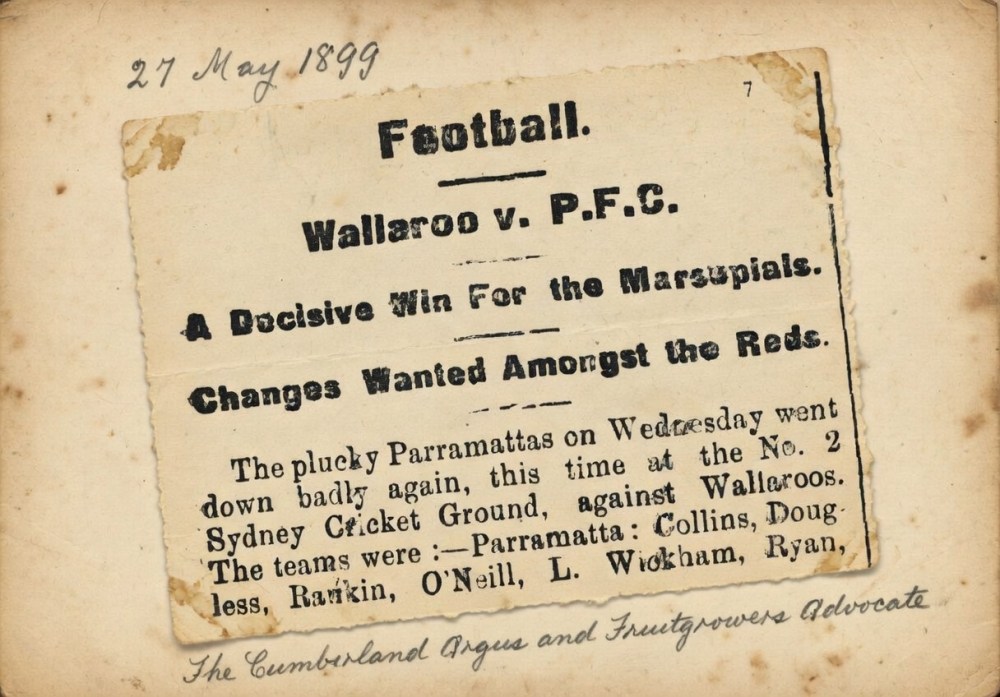
“Old Friends, The Marsupials”
Reflecting the broader sporting community, Sydney’s press — from the venerable Sydney Morning Herald and the rather less venerable Truth, to the popular sports weekly The Referee — fondly dubbed Wallaroo FC and its teams “The Marsupials”.
“Good old Wallaroo!
The ‘Varsity were taken down with a vengeance by their old friends, the Marsupials.”
— The Bird O’ Freedom, 31 August 1895 (Wallaroo vs Sydney University match)
In the 1870s, The Sydney Mail football reporter devised a thematic epithet calling the team “the black denizens” and “the black denizens of the hills” — a nod to the wallaroo’s fur and home.
“…the haunts of ‘the black denizens of the hills’ were not once invaded…”
— The Sydney Mail, 6 October 1877 (Wallaroo vs Waratah match)
Later on in mid-1880s match reports The Evening News went anthropomorphic with “The marsupial men,” and “Oxford-undergrad” clipping-style with “The Marsups.” A decade later, with the Wallaroo club now over 25 years old — when many clubs failed to last even 25 months — the same newspaper referred to them as the “historical marsupials”.
While the Wallaroo FC‘s match jerseys never officially bore a badge, the club caps (honorary presentation and award caps) with a wallaroo certainly did, as per the photograph at the top of this page.
Close scrutiny of surviving Wallaroo FC team photographs also reveals that certain players took matters into their own hands. Perhaps with the needlework of “lady friends,” these individuals took to the field with a large wallaroo silhouette proudly emblazoned across their jerseys.
Further afield, Charles Wade when in England studying law in the 1880s had a wallaroo styled onto his Oxford University jersey, while in any number of NSW team photographs during the 1880s-90s players from Wallaroo FC may be seen wearing their club cap.
All website text & content © Sean Fagan
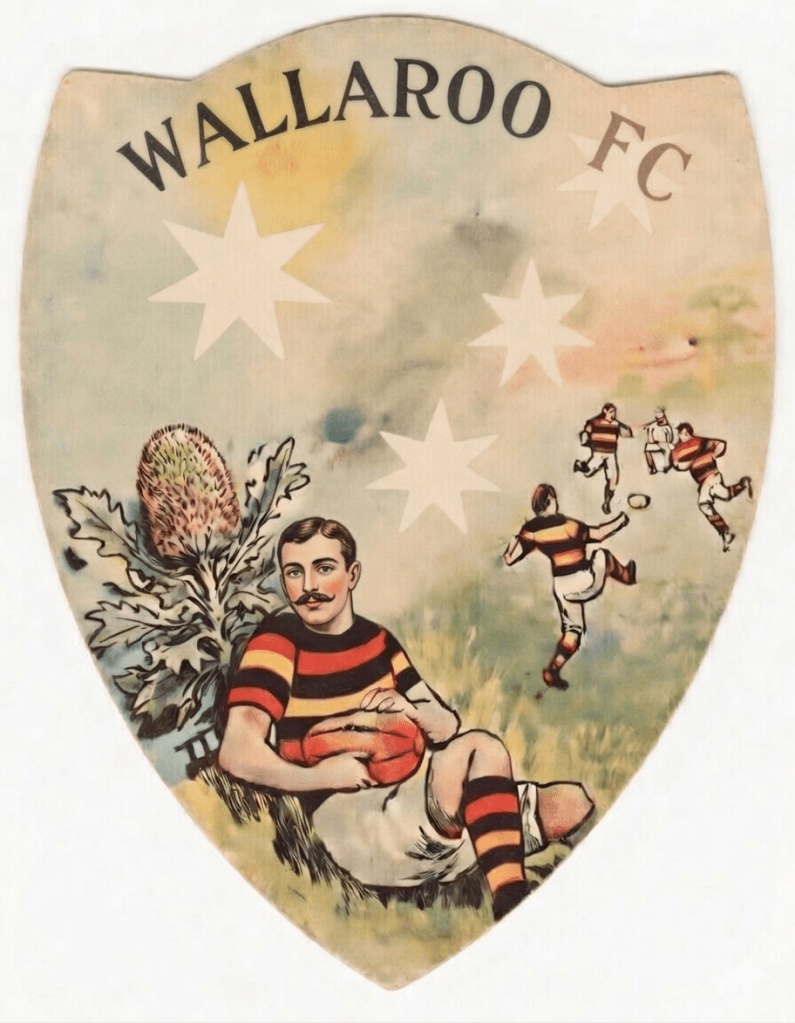
[ site homepage ]
“The Marsupials are notorious for fighting to a finish, and, like a racing cyclist, they invariably save themselves for a final effort. Thus it was that they added three tries in the second spell.”
— Australian Town and Country Journal, 20 June 1896
Note: The present-day ‘Wallaroo FC’ (AFL) in South Australia was originally titled the ‘Wallaroo Bay Football Club’ until at least 1880 (The Wallaroo Times, 2 June 1880). Regrettably, the club long ago scuttled its Spencer Gulf smugglers-era title, trading the picturesque bay-wide name for simply that of the town alone. The local geographical meaning of the anglicised indigenous word ‘wallaroo’ has no connection to the Australian wallaroo marsupial, and the club’s mascot is a bulldog. The first clubs formally named ‘Wallaroo FC’ were founded in Sydney (1870) and Brisbane (1879).
