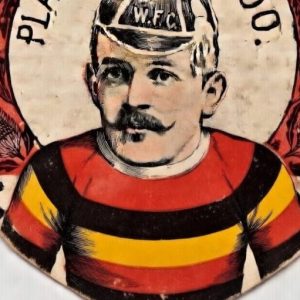
It is an oft-repeated myth that Northern Suburbs Rugby Football Club (North Sydney) was born in 1900 from a merger of Wallaroo and Pirates clubs. This claim fundamentally fails to understand the 1900 “district club scheme.” There is little evidence to support the merger theory and the origin of the “Shoremen” nickname.
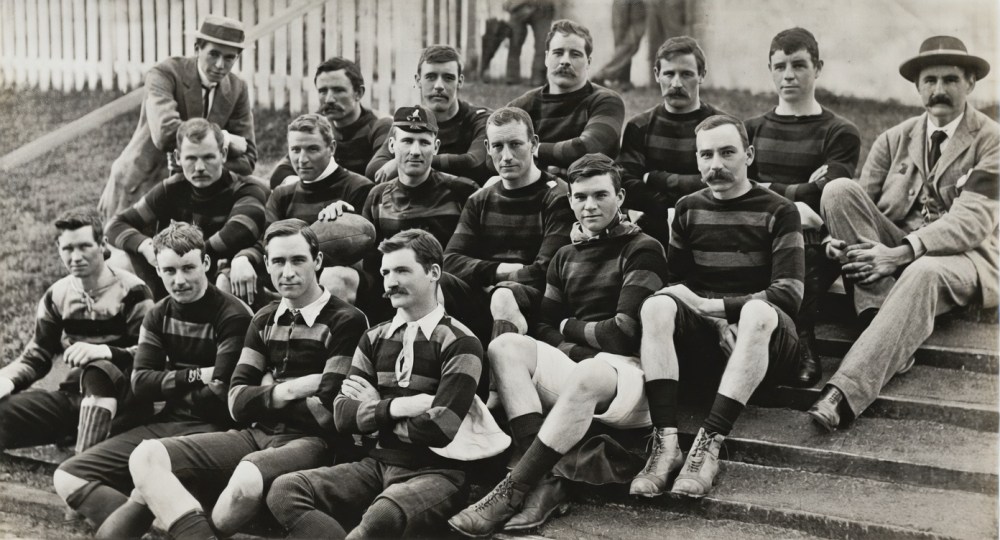
A look at the first Northern Suburbs (North Sydney) team in round 1 of 1900 says it all. More than half the team were not Wallaroo or Pirate players. There was no merger.
THE 1900 DISTRICT CLUBS SCHEME
In simple terms, Sydney was divided along electoral boundaries, with a new “district club” allocated to each area. These weren’t independent clubs; they were sub-branches of the Metropolitan Rugby Union (MRU).
Under the new rules, a footballer could only play first grade for the district where he lived. With the exception of Sydney University, no 1899 clubs—even those with suburban names like Paddington or Randwick—were permitted to enter the new competition.
“North Sydney. — The electorates of St. Leonards, Willoughby, Warringah, and part of electorate of Ryde as is included in municipality of Hunter’s Hill.”
— MRU meeting 16 March 1900 (Evening News, 17 March 1900)
Talk of a merger between the old social clubs was therefore pointless. Because players were drawn from all over Sydney, any attempted ‘merger’ would have been instantly dismantled by the residential rule.
Crucially, the ‘District’ identity was already well-established. By 1899, a ‘North Sydney District Club’ was competing in second-grade Rugby at North Sydney Oval, while the North Sydney District Cricket Club had been operating under that banner since 1894. These established local entities are the true forerunners of today’s Northern Suburbs Rugby Football Club (NSRFC), not an imaginary union of Pirates and Wallaroo.
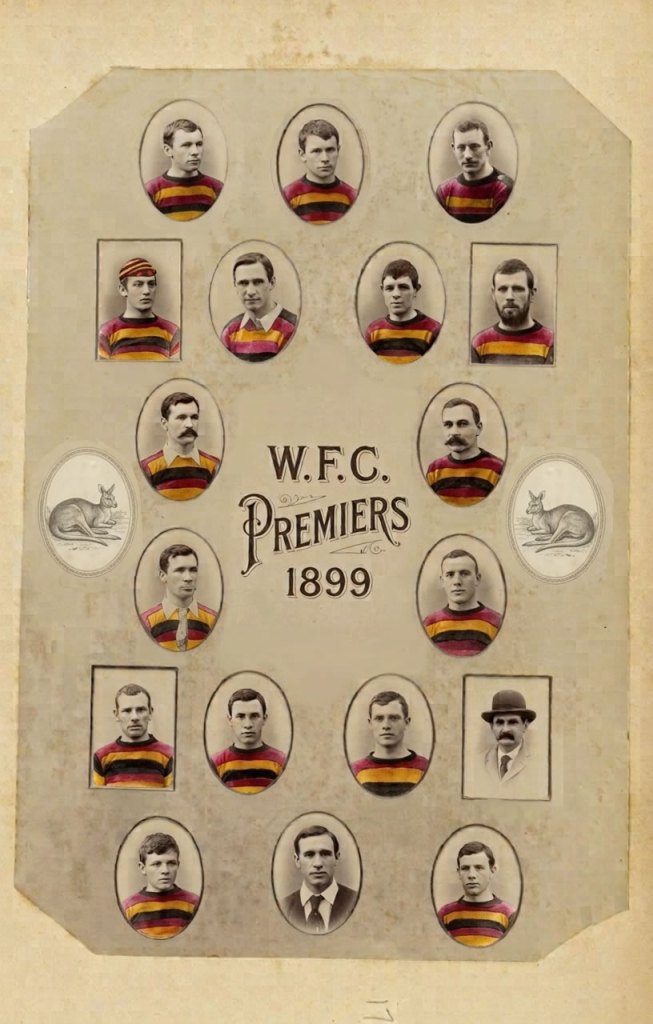
EVIDENCE OF A WALLAROO-PIRATES MERGER?
The annual meeting minutes for both Pirates and Wallaroo in early 1900 make no mention of each other, nor of any plan to combine. They didn’t vote to merge; they simply ceased to exist as top-flight entities. In the 1890s, clubs weren’t companies with intellectual property or assets to trade—they were social groups that were legislated out of the competition.
Significantly, Pirates had held a prior meeting in 1900, before the Union decided to adopt the district clubs model. At this meeting, Pirates voted to disband to encourage the Union to take the landmark move. This was a blow to the heart of Wallaroo, practically leaving them alone to fight for survival. In closing, the Pirates club secretary asked that “the members give their hearty support to the new scheme”—meaning the players had to go to their allocated residential clubs.*
If a merger had truly occurred, it is odd that both the pirate and wallaroo mascots were immediately abandoned. Even the ‘Shoremen’ nickname—often claimed as a Pirate legacy—was actually a generic term for any north-side team.
From the North Sydney Lacrosse Club (Sunday Times, 17 July 1898: “a win for the Shoremen”) to, notably, the North Sydney District Cricket Club (Sunday Times, 3 March 1895: “H. Deane played a capital innings for 38 for the Shoremen”). The tag was also later applied to the district’s rugby league (1908) and Australian rules (1903) clubs without NSRFC ever raising claim of sole ownership.
Furthermore, there was no symbolic union of colours. NSRFC registered their colours as green, cardinal, and gold as per the district cricket club, and spent its first seven years in search of a capable jersey manufacturer.
In the interim NSRFC wore traditional hooped Rugby jerseys chosen merely on their ready availability and that they were not in use or conflict with any of the other districts. The club’s teams wore red and blue 1900-04 then red and black 1905-06.**
Rather than at NSRFC, the 1899 Pirates, Paddington and Randwick jerseys all appeared again in 1900 in varying forms at other district clubs.***

As confirmed by the Pirates club meeting venues they were a north shore club, although the first grade side mostly played matches on the city’s south-side. At their founding meeting in 1889, which was held in central Sydney at The Custom House Hotel, their name was “The Pirates Football Club of St Leonards.”
The northern suburbs ties to Wallaroo though are far weaker. The club had not played or held meetings in North Sydney or anywhere on that side of the Harbour; the only connection was that several officials and retired and current players lived there.
The source of this historical “mischief” is likely a single gossip column in The Arrow (7 April 1900). The reporter noted that because the secretaries of the two defunct clubs were now working for Norths, the team had a “Wallaroo-cum-Pirates aspect.” This was a comment on the personnel living in the area, not a formal union of clubs.
Football Gossip
The North Sydney District Club has for its joint hon. secretaries Mr. J. R. Henderson (secretary of the Pirates) and Mr. Bridge (secretary of Wallaroo). With such a combination of the two old clubs the Shoremen ought to be a dazzling lot on the field. Altogether the club bears quite a Wallaroo-cum-Pirates aspect. There are such Wallarooites in the district as R. A. and W. M. Arnold, J. J. Calvert, P. M. Lane, C. White, R. and J. O’Donnell, F. Row, Futter, M’Cormack, and Kelly. The Pirates are not so strongly represented, but their men include F. G. Waley, J. R. Henderson, and Whayman. Besides, H. N. Slee is now a Shoreman.
— The Arrow, 7 April 1900
There was no merger of the two clubs Wallaroo and Pirates, and their players living on the south side of the Harbour were prohibited from joining the NSRFC.
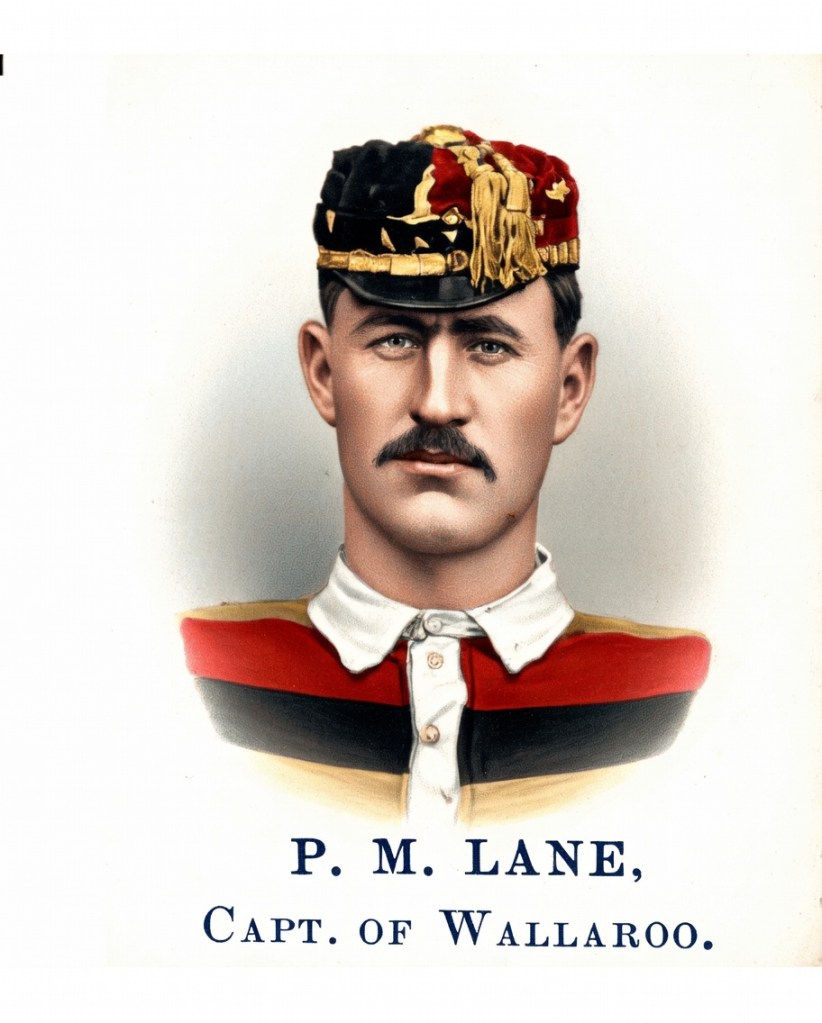
THE FIRST NORTHERN SUBURBS DISTRICT TEAM
The Arrow reporter practically admits the “combination” theory is weak at the outset: the debut North Sydney (NSRFC) first-grade team against Balmain featured almost no Pirates.
Player Origins (Round 1 of 1900):
M. Kelly (Full-back) — North Sydney District (2nd Grade club)
Charles White (Three-quarter) — Wallaroo player
T. Carr (Three-quarter) – Mosman’s Bay
Ignatius O’Donnell (Three-quarter) — Wallaroo player
J. Punch (Three-quarter) – St Leonards
J. Futter (Half) — Wallaroo player
J. McCormack (Half) — Wallaroo player
William Webb (Forward) — Wallaroo player
G. Woods (Forward) — Manly Federal
A. Stevens (Forward) — Sydney FC
C. Ellis (Forward) — Pirates player
H. Jervis (Forward) — Pirates player
H. Johnson (Forward) — Randwick FC
D. Lutge (Forward) — Marrickville FC
P. M. ‘Paddy’ Lane (c) — Wallaroo player
This team line-up is telling. More than half the team were neither Wallaroo nor Pirate players.
Indeed, just two were Pirates at all, belying the theory that the 1899 club was a team of northern Sydney residents.
Other players had come from North Shore lower grades, and many were ‘Shoremen’ residents who had in 1899 been playing with other first-grade clubs south of the Harbour in Randwick, Marrickville, and Sydney.
There is no Wallaroo-Pirate composite team here.
AND WHAT OF THE OTHER WALLAROOS?
The fate of the remaining 1899 Wallaroo players further proves the point. While players John O’Donnell and Alfred Kelly joined Norths once fit, others faced starting again on their own at a new club, giving the game away, or seeking opportunities outside Sydney.
The new rules forced G. Wheeler to Western Suburbs and W. Chisholm to South Sydney (though Chisholm appears to have dropped out before kick-off). ‘Joe’ Gardiner and E. Buck preferred to play only social Rugby in 1900—Buck’s decision followed the MRU’s refusal of his request to play for Eastern Suburbs. Meanwhile, Billy Glenn (‘W. Glen’) moved to Bathurst in the NSW central-west and continued his career there.
The mythical merger failed to deliver two of Wallaroo’s biggest stars. Frank Row, who had captained the first Australian team in 1899, sailed for New Zealand to play in Wellington. Similarly, star three-quarter Stephen Spragg moved to Rockhampton in central Queensland.
Writing to The Referee in April 1900 from Brisbane, where he was then playing, Spragg voiced the grief of a man whose sporting home had been destroyed: “I know the old club players cannot give up their old teams without more than one deep sigh of regret.” This was not the language of a man whose club had successfully merged; it was the lament of a player whose club had been legislated out of existence.
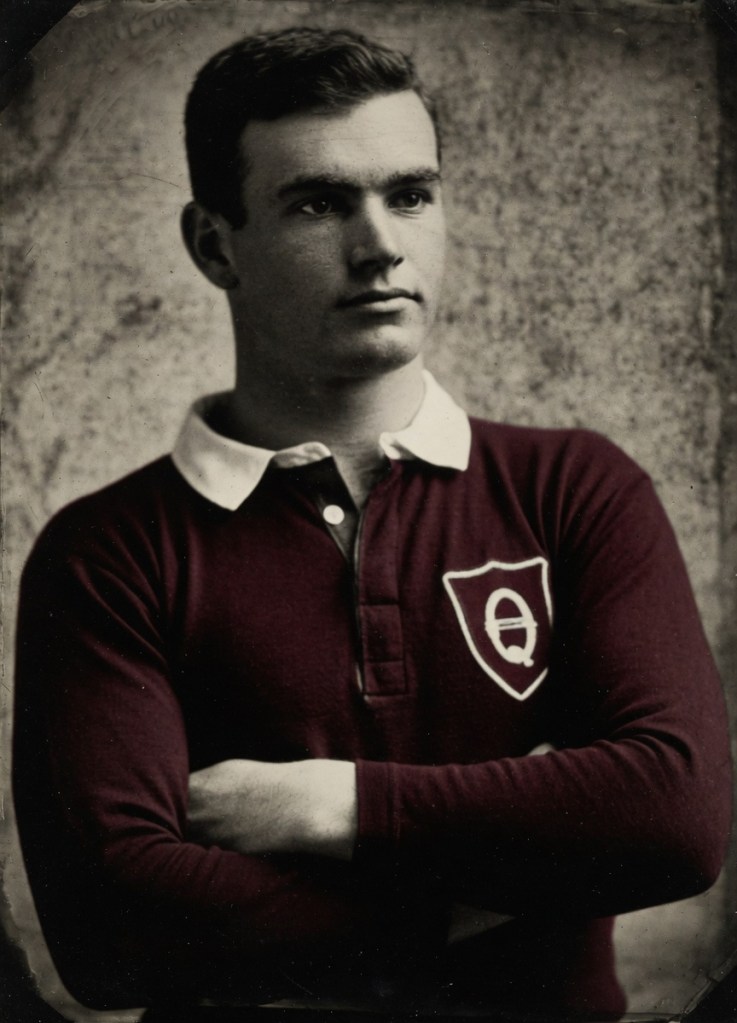
By July 1900, Spragg was back in Sydney—not as a Shoreman, but wearing maroon as a member of the Queensland team.
Ye fable a wedding of Pirates and Wallaroo bold,
A merged-born pride that the old gods never foretold;
The stern District Masters decreed each man to his shore,
By electoral law and no other your red and black rose evermore—
No composite clan, but a sovereign child of the Scheme, and nothing more.
* The Daily Telegraph, 8 March 1900
** The North Sydney RU club returned to red and black jerseys in 1913, and these colours have remained permanent ever since. Languishing through the mid 1920s at the bottom of the premiership table each season, in 1928 the club changed its name to Northern Suburbs to attract more players and support from Chatswood, Mosman and Gordon consequent of the construction of the Sydney Harbour Bridge which had greatly reduced much of the North Sydney residential areas. The “Northern Suburbs” name had first appeared in 1914 under MRU plans to merge the North Sydney and Manly district clubs, but this was abandoned upon the outbreak of WW1. While in 1908 the new rugby league clubs had mostly adopted their district rugby union clubs’ colours, the North Sydney “Bears” presumably avoided or encountered the same jersey supply issues and adopted red and black. In 1903, when the North Shore Football Club under Australian rules was founded, it wore maroon colours, until changing in 1926 to red and black to align with those of the NSRFC and the Norths rugby league club. As these were also the colours of the Essendon FC in Melbourne (VFL & AFL), today the club is known as the North Shore Bombers Australian Football Club.
*** Eastern Suburbs district club was the only new club in 1900 to take the colours of an 1899 club. At their founding meeting at the Paddington Town Hall, Easts adopted the red, white, and blue of Paddington FC (referred to as “the Barber’s Pole people” by The Bird O’ Freedom)”. Easts however played through the entire 1900 season in Pirate’s all-black jerseys while waiting for their new tri-colour kit from England. The Paddington colours remain in use today by the Easts Rugby Club and have extended to the NRL’s Sydney Roosters. Additionally, for the 1900 season, the new South Sydney district club adopted the unique 1899 Randwick FC jersey design, albeit in different colours (cardinal and myrtle). That jersey design is now famously attached to the NRL’s South Sydney Rabbitohs.
Note: The West Harbour RFC, founded in 1900 as Western Suburbs District Rugby Club, maintains a similarly questionable origin story regarding merged clubs.
WallarooFC1870.com – All website text & content © Sean Fagan
[ site homepage ]
