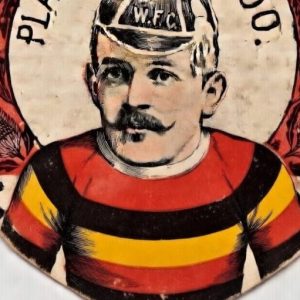
This is the story of the “Manhattan Purchase” of Australian sport—how the Arnold brothers of Wallaroo FC seized Queensland for Rugby with a train ride through the mountains and a mysteriously lost letter that swung the football wars in their favour.
It was the Great Wallaroo Land Swindle of 1882, the cleverest Rugby zig-zagging dodge ever.
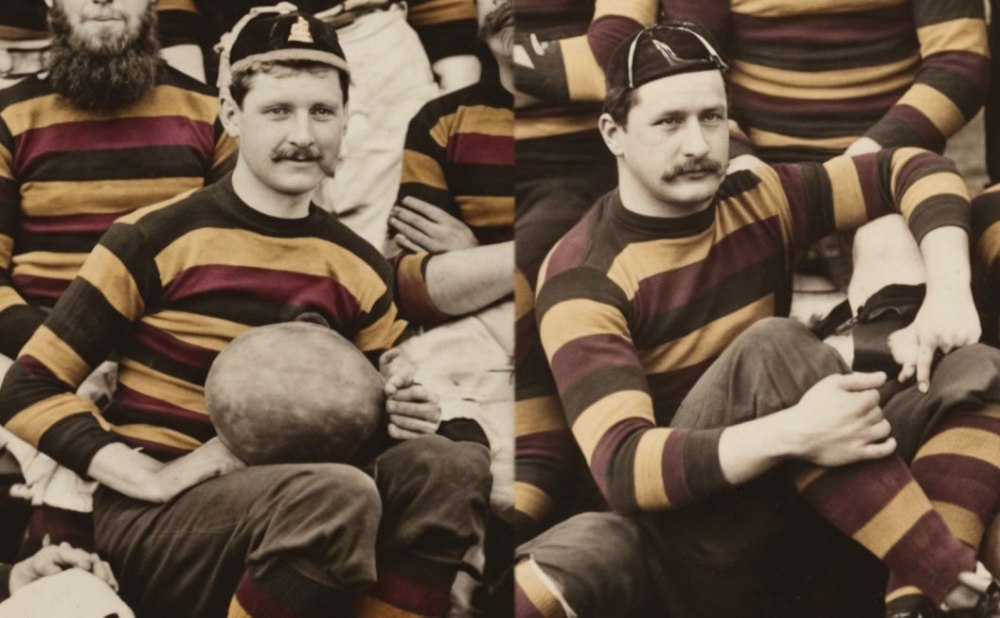
Rugby and its short history in Australia seemed ready to walk down the darkest alleys of Little Lon, never to be seen or heard from again.
A Question Of Football Loyalty
In the 1870s, Queensland football was notoriously fickle. One season clubs played Melbourne rules; the next, they switched back to good old Rugby.
When Pring Roberts—an “old boy” of both Ipswich and Brisbane Grammar Schools—joined Brisbane FC in 1875, Rugby was the dominant code. Over the following seasons, local newspapers regularly praised his exploits: sharp drop goals, long solo runs, scoring of tries, and other intricacies of the Rugby game.
Yet by the early 1880s, Brisbane FC, the Brisbane Wallaroos, the other clubs, and all the schools had once again fallen head-over-heels for the Melbourne game. A Queensland Football Association (QFA) dedicated to Melbourne rules had been established, and it looked increasingly likely that the entire colony would permanently commit, body and soul, to the ball-bouncers.
However, there was a steady stream of new arrivals migrating from Britain to Australian shores. For the 1882 season, three of the QFA’s twenty scheduled matches were to be played under Rugby rules. This was a polite concession first obtained in 1880 for a single game by Fred Lea (ex-Blackheath FC) of Brisbane FC and H. St. Paul of Wallaroo FC. As “veterans of many a Rugby match in the home country,” they successfully fought “to give the several players of both clubs an opportunity to pass an afternoon with that play in which they had been instructed in their early football days.”
Meanwhile in Sydney, where Rugby had reigned alone throughout the 1870s, loyalties were beginning to fracture. Melbourne rules had gathered serious momentum across NSW. Albury, Broken Hill and other border towns were long gone. In 1880 the NSW Football Association (NSWFA) was formed in Sydney, and in 1881 it hosted high-profile matches on the SCG, with an “inter-colonial” match between the Victorian representative team and NSW, and then Melbourne FC in two games against local clubs.
In Queensland, Roberts had become captain of Brisbane FC. Inspired by the reports of the Melbourne FC tour, he immediately began taking steps to have his club make a visit to Sydney.
Rugby Destined For The Alleyways Of Little Lon
Rugby in Sydney was starting to look dangerously isolated and vulnerable. Wallaroo captain and senior NSWRU official Richard Arnold spoke passionately about his efforts underway forging closer ties and inter-colonial matches with New Zealand—the only other Australasian colony still holding firm against Melbourne rules.*
The idea had so far proven impractical, not least because there was not as yet any colony-wide Rugby association to negotiate with (e.g. NZRU), and there was the formidable thousand-mile sea distance each way, associated tour costs, minimal likely gate-takings, and the necessity of an unpaid month away from work for the footballers.
Arnold’s goal would in time make great sense, provided the game survived long enough to see it. For the present, Rugby and its short history in Australia seemed ready to walk down the darkest alleys of Little Lon, never to be seen or heard from again.
The Lost Letter
In July 1881, Roberts wrote a letter to the Melbourne rules NSWFA in Sydney, politely enquiring what inducements they might offer for his Brisbane team to visit the Harbour City. By a twist of fate, that innocent letter stayed trapped in a dark corner of the Sydney GPO. It didn’t see daylight again until it was finally unearthed at a NSWFA meeting in May 1882.
By then, however, the NSWFA was preoccupied with arranging a landmark tour by Geelong FC, one of Victoria’s hot-shot Melbourne rules clubs. With their attention divided, all they offered Roberts in reply was a distant, lukewarm “perhaps next year.”
The Wallaroos Smell Opportunity
The story of the lost letter and the NSWFA’s snub quickly leaked into the Sydney newspapers, immediately catching the eyes of Richard Arnold and his brother, fellow Wallaroo stalwart William ‘Monty’ Arnold. A master of the diplomatic pen, Monty pounced on the opportunity.
Without any prior discussion at a NSWRU meeting, Monty wrote directly to Roberts, putting a generous offer. He promised that the city’s Rugby men would enthusiastically welcome a touring team and that the Union would bankroll all their expenses—steamer fares, premier lodgings and incidentals. In return, the letter asked only that the visitors be a representative Queensland team and play exclusively under Rugby rules. This was to be an inter-colonial tour.
By the time the matter was finally presented by the Wallaroo FC at an official Union meeting, chaired by Richard Arnold, Roberts was already dwelling upon the offer. The Arnolds’ cover story to the members was awry regarding which club they were dealing with up north, claiming their club secretary George Graham had simply received “letters…from Mr. Pring Roberts, of the Wallaroo Football Club, Brisbane, challenging the Sydney Wallaroo Club.” The Union later acknowledged where the coup had actually emanated, recording that it was “the Wallaroo Club preferring that the matches should be Intercolonial.”
“We should be afraid of an intercolonial Rugby contest; the party spirit that runs so high in the cricket matches would find vent in a football match in some awkward mauling and smashing.”
— The Bulletin (Sydney), 29 July 1882
Champagne, Zig Zags, and a Bargain
At first, Roberts tried to be fair to his Melbourne rules footballer colleagues in Brisbane. After all, they were in the majority. So he went back to the NSWFA offering a dual-code tour from a Queensland team. They weren’t interested unless everything was played under their rules, though they did eventually sweeten the pot with fifty percent of the gate money. It was a poor offer compared to the Wallaroos’ open-handed bargain.
Things moved quickly after that. At a meeting of Brisbane clubs, Roberts stunned everyone by unexpectedly announcing he had telegraphed the NSWRU and already accepted the all-expenses-paid tour.
To seal the deal, Monty Arnold had promised the Queenslanders “generous colonial hospitality.” This included the obligatory harbour cruise and end-of-tour banquet, alongside a seemingly endless river of champagne. The clinching offer, however, was a train trip through the Blue Mountains to experience its scenic views, waterfalls and the famous Zig Zag Railway—the bold marvel of Victorian-era engineering skill.
For The Colony’s Sake!
At that news the outcry in Brisbane triggered more headlines than the following year’s Krakatoa eruption. It was an absolute sell-out! Outraged traditionalists flooded the press, claiming the bait was taken “ostensibly for no other purpose than that of sensual gratification.”
Critics slammed negotiators who risked the colony’s football reputation just to secure “the enjoyment of the many pleasures held out,” forcing men to play a game they knew absolutely nothing about. Worst of all, the organiser was branded as having “strong Rugby tendencies”—as if it were a contagious social disease.
“..that the terms of the Union were the more favourable, which means the Brisbane team (for such it is) will be treated most luxuriously, will have a trip up the Zigzag…How could such inducements be resisted? A chosen team is to revel in all this fun to compensate, I presume, for the blow we as footballers will receive at the crushing the team is expected to suffer…”
— The Brisbane Courier, 4 August 1882
The tour committee shut down the moral panic with cold arithmetic: the recent Geelong tour had just lost £150 because Sydney spectators flatly refused to pay for Melbourne rules. Faced with a NSWRU offer too grand to counter, the critics soon wore themselves out, with one bitterly spitting out a final, sarcastic defeat: “The terms have been unconditionally accepted. A glorious time of it anticipated. What more do we want?”
Meanwhile the city’s Rugby experts Lea and St. Paul umpired and coached a trial game to polish up and select the Queensland squad.
“I see the Queenslanders have included a doctor in their ranks, which is certainly consoling, though it may interfere with the business of one or two of our medicos who regularly attend the Association Ground [SCG] to put the fragments together.”
— The Sydney Mail, 12 August 1882
The First Of An Annual Tradition
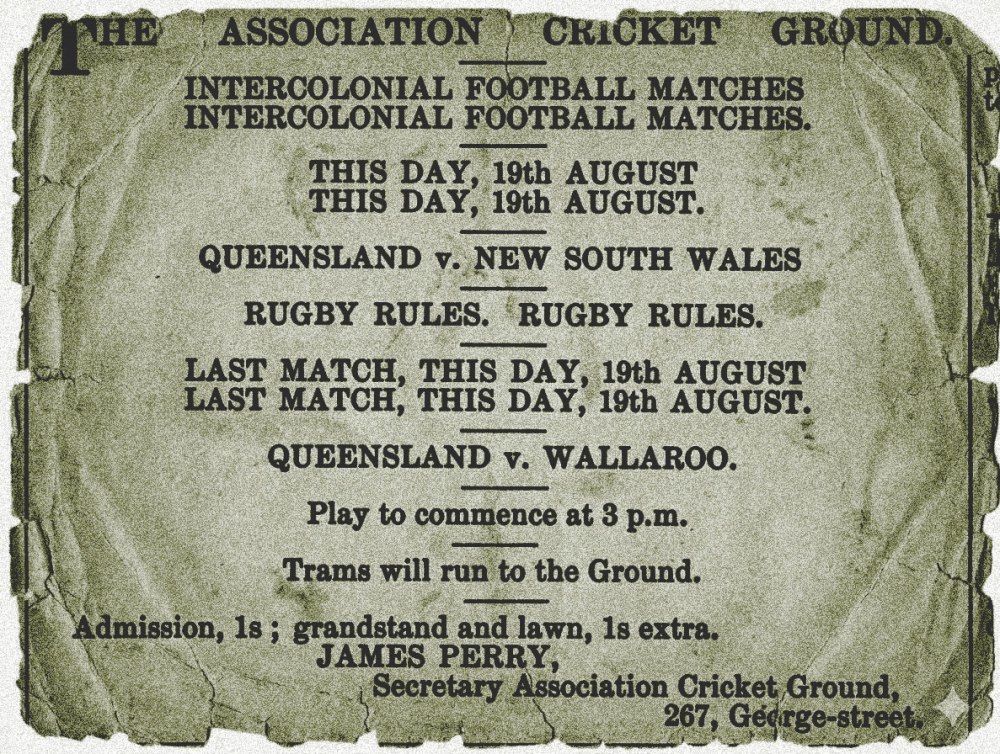
Seventeen Queenslanders, including Roberts, came steaming in to Port Jackson aboard the Leichhardt just at dusk on Wednesday the 9th of August, 1882. Their first match, set for the coming Saturday, would be against the full NSW side at the SCG. Five more games after that, and the whole tour promised a two weeks’ stay in Sydney.
The Queenslanders’ captain was Arthur “Jumbo” Hickson, a Scotchman who had seen Rugby duty at Dublin in Ireland, both with the University and the Wanderers clubs. Not giving a bosh for Melbourne rules, his first and only appearance in Brisbane football was a Rugby match in July, where The Queenslander called him “an exceedingly well-developed specimen of a Wallaroo.” Many years afterward Brisbane’s Sports Referee let it be known there was “no doubt” Hickson had “influenced” Roberts.
Met at the wharf and bundled into four-horse drags, Hickson, Roberts and the rest of the team were whisked away like visiting royalty to Tidswell’s Metropolitan Hotel in King Street. The Queensland footballers also included Thomas Welsby, another man destined to figure prominently in the story of both codes in Brisbane.
At the hotel a reception was held, and free passes were handed out for rail travel anywhere a man might fancy, together with promenade tickets for the grand hall of the Garden Palace**, as well as for the various theatres of the city. With champagne flowing freely for all, Richard Arnold rose to propose a toast to the visitors. He declared this the first inter-colonial match under Rugby rules in the colony, hoping it would become an annual tradition. “Hear, hear!”
A Zigzagly Caboose
Off the field, the real conquest was made. The Queenslanders were treated to their promised Blue Mountains scenic railway trip, presented with their own private saloon car by the Railway Department—though they were so thoroughly worn out by that ceaseless stream of hospitality that they never reached the famous Zig Zag, but called “no side” [game over] at Mount Victoria and let it go at that. The Bulletin hinted the saloon was “zigzagly” enough.
Monty Arnold likewise hosted a pleasure-party ferry cruise (on the steamer ‘Wallaby‘)about Sydney Harbour, yet the crown jewel remained the anticipation of “more jollification” at the end-of-tour banquet that same night. Held once more at the Metropolitan Hotel with sixty or seventy footballers present, Monty delivered a razor-sharp, humorous speech that roasted the newspapers for puffing the Melbourne game while sneering at Rugby, setting the whole room ringing with laughter.
Perhaps The Sydney Morning Herald man belonged to the other camp, for he hinted that the Wallaroo’s eloquence was well lubricated by liquid refreshments, describing his effort as “a humorous but digressive and illogical speech.” Never mind; the Queenslanders were mightily impressed. One of the visitors declared that in Monty Arnold a greater defender of Rugby could nowhere be found.
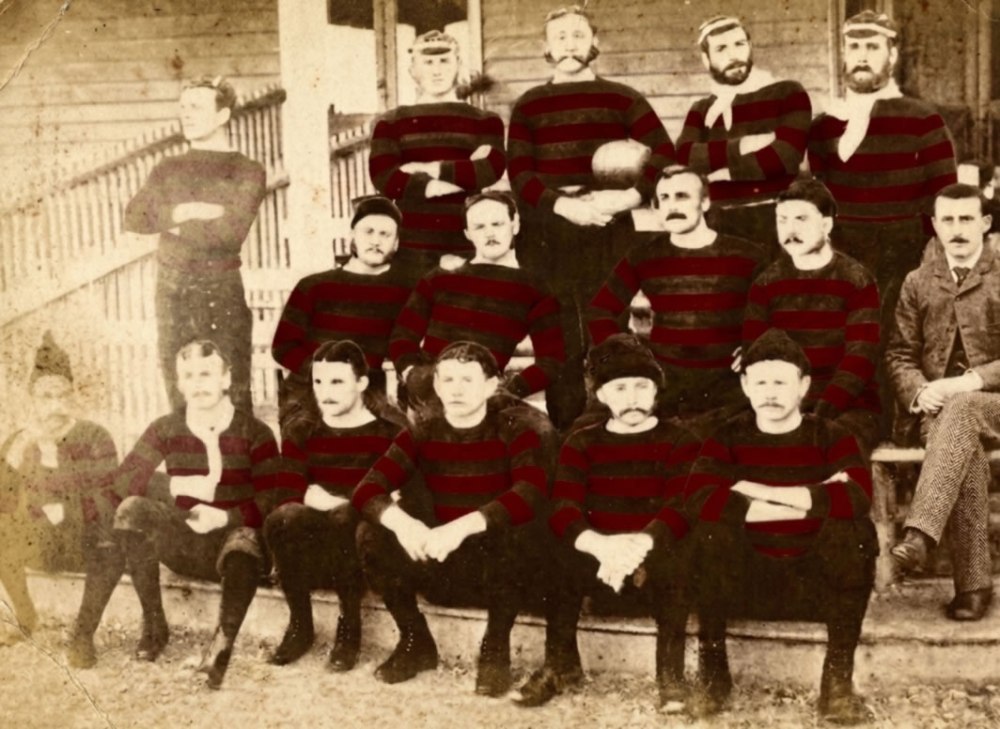
1882 Queensland’s first Rugby team at the SCG prior to kick-off vs NSW
Covered In Bruises and Glory
On the field, the first Queensland XV turned out in Brisbane FC jerseys of red and black hoops against the navy-blue NSW. Richard Arnold took the flag as sole umpire in this opening inter-colonial match—a nice touch, and a fitting bow to his long-cherished dreams.
As might be expected, with only four of the team possessing any useful Rugby experience, the Northerners were beaten in their two matches against NSW combinations. Yet they surprised both opposition and SCG crowd with their stubborn pluck, drop-kicking, nimbleness, and dash. Even the NSW skipper, Wallaroo’s James Brodie, proclaimed that the opening clash was the finest display of Rugby football he had yet seen that season.
The game against the “County of Cumberland” was held at Elizabeth Farm. To reach it the team took a river steamer to Parramatta Wharf, toured the town in a four-horse drag, and enjoyed pre-match champagne at Kelt’s Emu Hotel. The appointed ground was “about as uneven a piece of real estate as one could wish to fracture a collar-bone upon,” with a rutted cart track running through the middle like an extra tackler eager to bring a man to grass. Victory secured, the team returned to the Emu for post-game drinks and yet another sixty-person festive banquet.
The Queensland vs Wallaroo Match
In a most hilarious twist, the Queenslanders managed a glorious SCG defeat of the Wallaroos themselves the day after that end-of-tour banquet. The visitors crossed for two tries, one of which was converted for the afternoon’s only goal, securing a most unexpected win.
Where before the tour ‘Emu’ in the Sydney press speculated the dinner had been set for the night before “with a view to putting them a bit ‘off’ for the next day when they meet our redoubtable Wallaroos,” instead the result left many wondering whether the hosts had perhaps paid too little attention to their own “early to bed” orders. The irony was thicker than a winter fog on the Harbour!
For all that, while the contest was played in good spirit, it was nevertheless fought very hard to the end, “with the players in both teams straining every nerve, and their mud-besmeared and tattered uniforms sufficiently indicating the severity of the struggle.”
The Rugby Question
The Queenslanders sailed for Moreton Bay as full converts, with the meeting of the two representative teams again already being talked about. Captain Hickson had earlier thanked their hosts warmly, adding that every man of the team was deeply gratified by the lavish hospitality.
Later, safe back home, he confided that the team had their “shortcomings” owing to so many being unacquainted with Rugby rules; yet “what he laid the greatest stress on was the unbounded hospitality of the New South Wales footballers.”
Roberts “professed to play Melbourne Association, and tries to play Rugby, but he confessed to his being a complete convert to Rugby” now.
“…the Southern Rugby Union never played a better card than when they induced the Northern footballers to come down here under their auspices, especially as it gave them a chance of converting a number of leading supporters of the Victorian game in Queensland to their own way of thinking…it must be confessed that the Southern Rugby Union are likely to have a local habitation and a name in Brisbane before long.”
— The Sydney Mail, 2 September, 1882

We’re Broke
Just two weeks after the visitors sailed out of the Heads and turned their wearied physogs northwards for home, a 16-man NSW party followed them, only their ship swung south-east for Auckland.
Emboldened by the success of the Queenslanders’ visit “a Sydney team must go to New Zealand” — the NSWRU pressed ahead with a tour of the sister colony, arranged through the Wellington RU (WRFU) who coordinated the various provinces.***
At this point though the NSWRU had “no funds” of its own.**** All the financial risk was carried by the players. Each man paid a £5 deposit as a guarantee of good faith and signed an agreement stipulating that they would cover any shortfall in tour expenses from their own pockets. Any profit, on the other hand, would go to the NSWRU.
This arrangement meant only six of the 16 tourists were from the NSW team that had faced Queensland just weeks earlier. Only those who could afford the time away from work and the personal financial risk could take part — a very different proposition from the full-costs and hospitality-focused visit Roberts had struck with the NSWRU via Monty Arnold. The squad included Wallaroo players George Graham, Henry Fligg and George Richmond.
Over the following month, the NSW team played seven Rugby matches in New Zealand. To everyone’s relief — especially the players — their share of the gate takings was sufficient to cover costs.
The Payoff
The payoff for Rugby on season 1882 was immeasurable.
In August 1883 a NSW team steamed north to Brisbane, and they were managed by none other than Monty Arnold himself. The crowds for those matches were the largest ever seen for any outdoor sport in Queensland. To top it all, there were wild celebrations after the home side defeated NSW in one of the games. The tidal wave became a flood. Within weeks the Northern Rugby Union (QRU) was born.
In mid 1885, led by the old Queensland captain Arthur Hickson, Brisbane’s Wallaroo club left the QFA and switched to being a club solely devoted to Rugby — Bravo! — and celebrated by then defeating NSW by 5 points (a converted try) to 4 (two unconverted tries) in a match at Bowen Bridge.
The inter-colonial Rugby triangle — linking NSW, Queensland, and New Zealand — was now an unexpected but welcome reality. In 1888 the three Rugby colonies would welcome the first British Lions.
As the 1890s began the Melbourne rules game in the north withered and died out completely with no QFA, clubs and schools. Extinct. In NSW the NSWFA and all its clubs collapsed in 1893.
One undelivered letter now bore a very heavy postmark.
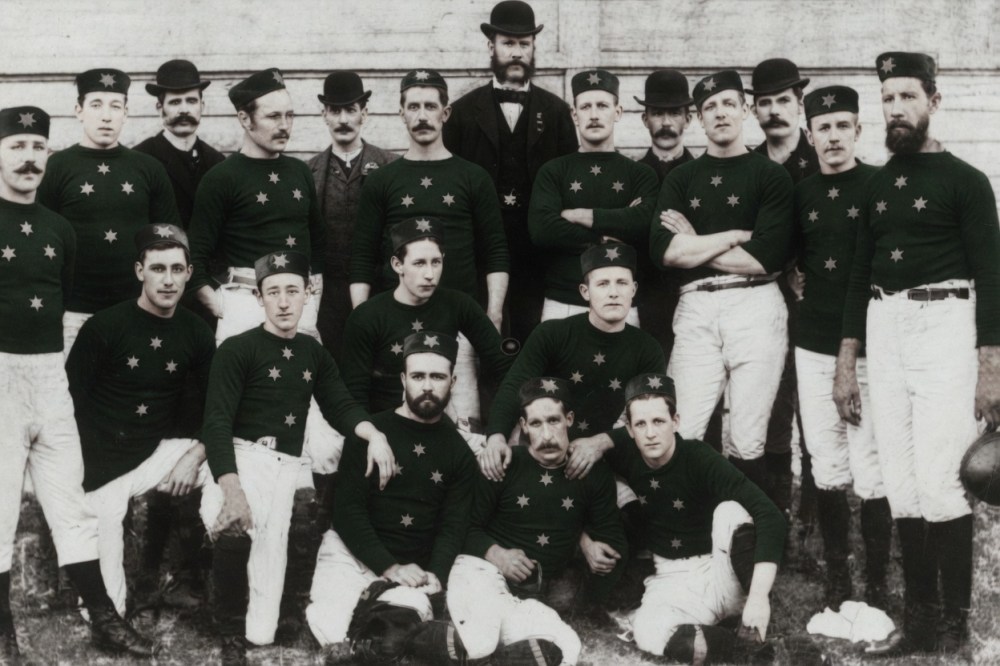
EPILOGUE: A Wallaroo Grin
As the newspapers told it, when that 1883 NSW team’s steamer approached Brisbane at dawn, the local footballers could just make out a tall figure standing at the bow.
It was Monty Arnold. His familiar eyes peered back at them, and like Alice’s famous cat grinning from ear to ear upon the hearth, Arnold wore the deeply satisfied smirk of a creature who had dined very well indeed.
The native wallaroo doesn’t dine out on Victorian mice — but this Marsupial surely did!
* The NSWRU was until 1892 originally named the Southern Rugby Football Union (1874), following the Rugby Football Union in England (1871). Richard Arnold letter to George Campbell in Wellington NZ similar to 1882 Queensland visit arrangements appeared in Otago Witness of 12 July 1879 (reference to this letter/s also in The Sydney Mail of 8 May 1880 and 1 July 1893).
**A Sydney landmark on the same grand scale as the domed Queen Victoria Building, the Garden Palace stood in The Domain near the Botanic Gardens, overlooking the Harbour. Just days after the Queenslanders sailed out of the Heads, the Palace was completely destroyed by fire in just forty minutes.
*** The Sydney Mail, 4 November 1882.
**** The Sydney Mail, 4 November 1882 & 5 May 1883. At the NSWRU annual meeting in May 1883 it was reported “The season of 1883 will open with no funds” due to “the expenses connected with the intercolonial matches, and a loss on the dinner to the Brisbane team, with other disbursements.”
Note 1: The story that a meeting of Queensland’s independent school headmasters saw the adoption of Rugby as their preferred code by a one-vote majority in 1887 is a myth that has no logic or evidence to support it. Queensland had no state high schools until the 20th century. There were only three grammar schools (male) in south-east Queensland in 1887 (the other two in Rockhampton and Maryborough were so remote as to have had no association & exchange of matches with the other three until 1908). In the 1880s the boys decided what code they would play, not masters. In August 1887 the Brisbane and Toowoomba grammar schools played their annual match under Rugby rules for the first time (The Brisbane Courier, 22 August 1887). Ipswich grammar school first played Rugby two years later (The Brisbane Courier, 10 June 1889).
Note 2: The Queensland 17-man party was heavily balanced between the Wallaroo FC and the Brisbane FC. Wallaroo provided seven players to the touring party, including team captain A.J. Hickson, alongside T. Bond, Frederick Hardgrave, Edward Markwell, J. Townson, J.C. Boyd and H. Macintosh. The Brisbane FC contributed eight players: Arthur Feez, Frank Baynes, Daniel Foley Pring Roberts, Jack Burrell, H. Pritchard, H.J. Stokes, C. Tully, and Thomas Welsby. The remainder was completed by Jack Blake of the Excelsior Club and Dr. Arthur Cutfield, the Medical Superintendent at the Woogaroo Asylum.
WallarooFC1870.com – All website text & content © Sean Fagan
[ site homepage ]

One Comment
Comments are closed.