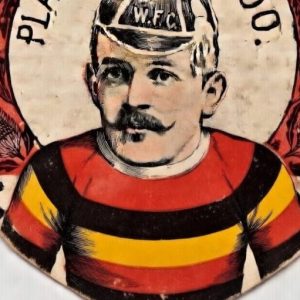
A broken leg, a break in play and a hurried break-in created a Wallaroo legend.
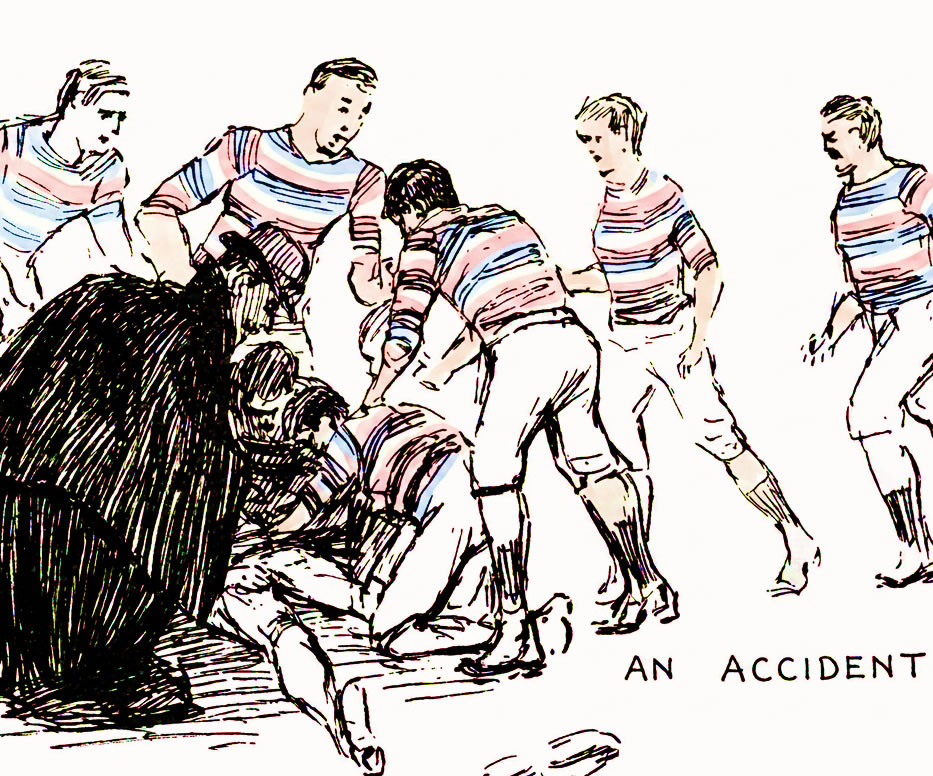
Well, we fought the friendly game out, but I couldn’t say who won;
We were all stretched out on shutters when the glorious day was done.
Every long-established Rugby club celebrates its most cherished stories, handed down through generations in clubrooms, at dinners, and on old boys’ days. Some recall great tries, heroic tackles, legendary characters, or famous victories.
Wallaroo FC has many, but this one from the club’s earliest days stands out—a tale of quick thinking and mateship in which members of the team undertook a “break-in” of one of the colony’s most famous government buildings, all in the aid of their injured captain.
A WELCOME CHALLENGE
Wallaroo FC, established in 1870 as Sydney’s first true Rugby club, had quickly earned a reputation for hard, honest play. In late autumn 1872, the club received a welcome challenge from the students and masters of The King’s School, Parramatta.
The challenge was accepted. To even the numbers, it would be fifteen Wallaroos against twenty from King’s. For the latter group, this was their first match against outside opposition. A bold way to begin!
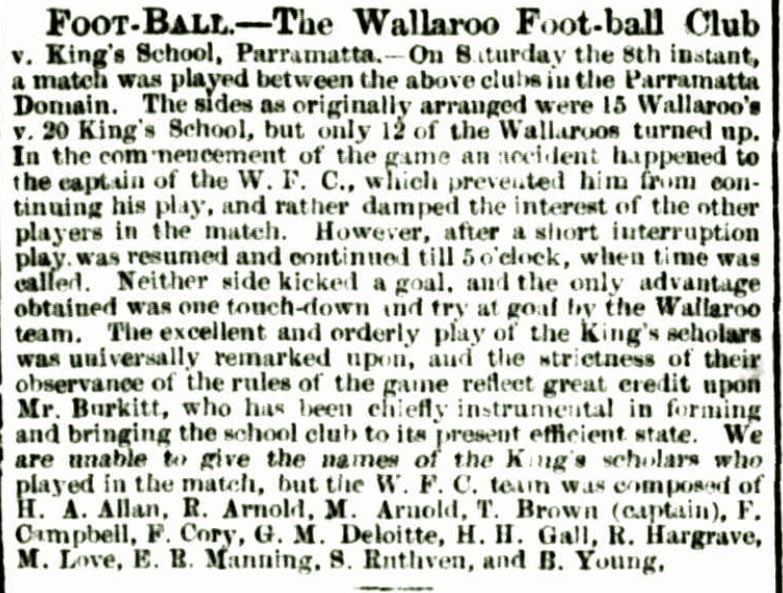
Under the guidance of the then Assistant Master, William “Gurry” Burkitt, the scholars had taken up in-house Rugby games and daily training. It would later be reported after the match that the School boys played with admirable discipline and strict observance of the rules, reflecting great credit on Mr Burkitt.
AGAINST THE ODDS
On match day, 8 June 1872, Wallaroo club secretary Richard Arnold notified the team via The Sydney Morning Herald: “Wallaroo Team leave for Parramatta, by 1.30 train.”
For the first game of the season, a somewhat rag-tag group of Wallaroos gathered at the Redfern terminus (near today’s Central Station). When the train departed for the 30-minutes long journey to Parramatta, only twelve Wallaroos were on board. That would have to suffice.
Fellow club founders Richard and Monty Arnold were in the team, while the elected captain was the popular co-founder Tom Brown. Burkitt captained King’s. The match was played on the Parramatta Domain (Parramatta Park)*.
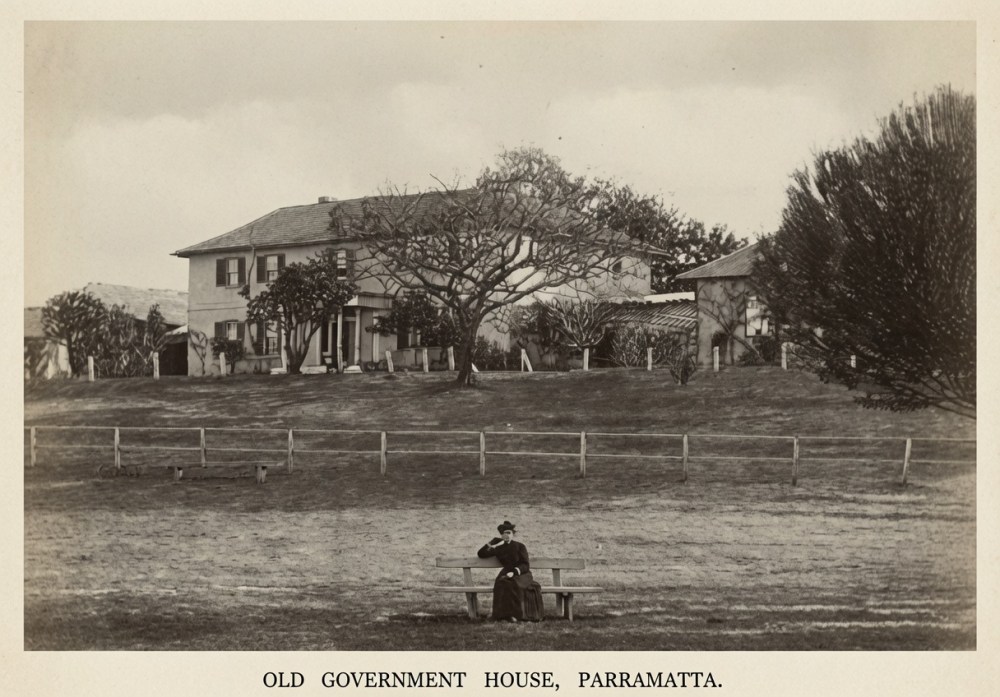
The Wallaroo footballers most likely changed into their new-fashioned tri-colour jerseys (red, white, and blue Union Jack colours) at the Woolpack Hotel or Old Government House—a two-storey Georgian building once home to governors such as William Bligh (well after the HMS Bounty drama) and Lachlan Macquarie. As recently as 1868 it had hosted a luncheon for Prince Alfred, son of Queen Victoria, but by 1872 it was largely unoccupied, mouldy and covered in overgrown vines.
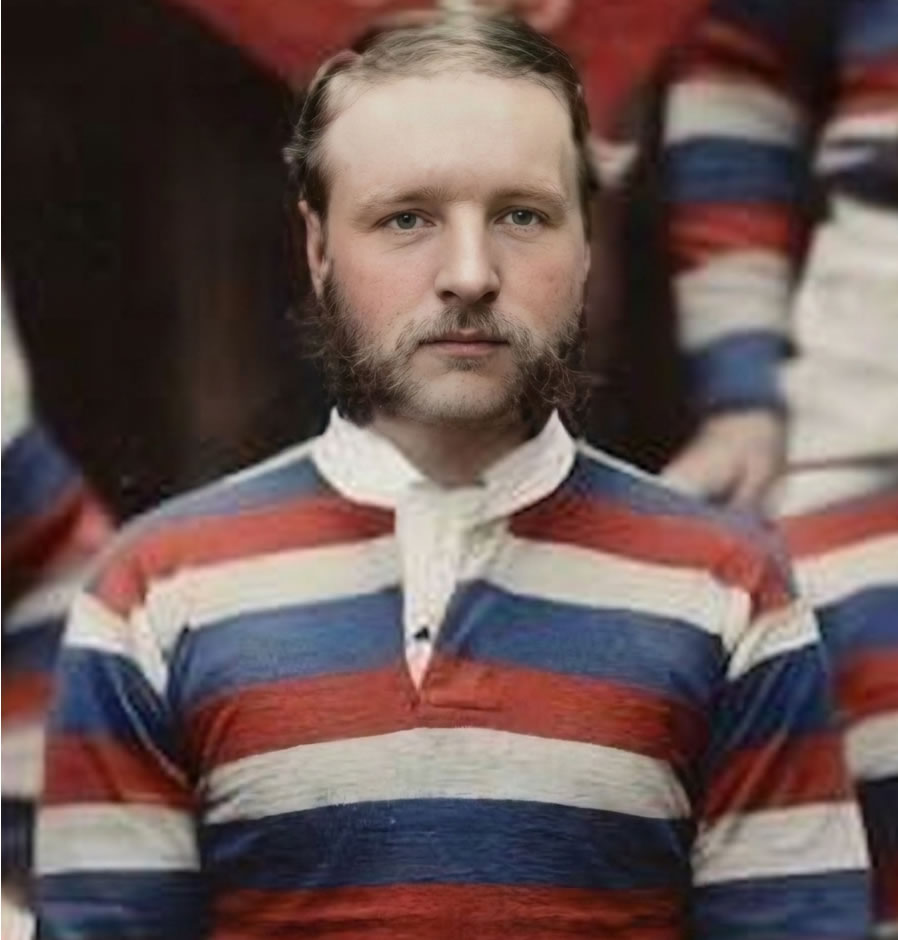
THE CRACK!
Play opened in the heavy, scrummaging style typical of the era. The greater numbers favoured the School, but experience favoured the Wallaroos. Then, disaster struck.
Following the ball with his usual dash, Wallaroo captain Tom Brown collided heavily with teammate George Deloitte. Brown’s leg snapped with an audible crack.
“I well remember the first match the Wallaroos played against the King’s School Club. The event took place on the Domain at Parramatta, and, after play had been in progress for some time, Tom Brown, of the Wallaroo Club, when following the ball, inadvertently kicked across in front of George Deloitte, also belonging to the same team, and broke his leg.”
— ‘Monty’ Arnold, Old Times, July 1903
Lashing out with the boot to kick the football in open play was the frantic last resort of a flustered Rugby novice. Experienced players like Brown only did this when attempting the controversial, now-forgotten “field goal” — kicking a loose, rolling ball directly off the ground over the crossbar. These soccer-style “flying kicks” were increasingly frowned upon by Rugby purists as mere “speculation” — more fluke than skill — and carried a serious risk of broken legs to oneself or others.**
In 1872, there were no trainers, ambulances, or stretchers. While Brown lay in pain on the damp winter ground, sustained only by a traditional stiff nip of whisky from the club’s medical bag, it was essential to remove him quickly.
Carrying him by hand all the way back to town was impractical. With no spectators or nearby transport, the players desperately looked for alternatives. No wonder at Rugby School the frequency of broken limbs and other injuries from football caused the inventive young minds there to design and build their own “death cart” perambulator.
HOME ON A SHUTTER
A familiar Rugby battle-cry of the era against the opposition, although no one really meant it, was to “send them home on a shutter!” But it did have a certain ring of truth to it. In an emergency, removing a severely injured player did mean resorting to whatever could be quickly found to serve as a stretcher – any sturdy window board or door would do.
The Domain was miles away from local houses, but the Old Government House stood nearby. It’s got doors – fine ones too!
Questions of permission were swiftly set aside in the urgency of the moment. The Arnold brothers worked in the NSW Parliamentary offices, and their father was Speaker of the NSW Parliament—in the players’ minds, given the pain and injury their captain was enduring, that was authority enough.
Without ceremony, a party of Wallaroo men breached the historic building and once inside lifted a sturdy timber door straight off its hinges. The colonial ghosts were the only witnesses.
Six grass-stained and muddied footballers, like pall-bearers, then carried their fallen captain away toward Parramatta, their multi-coloured striped football kits making for a highly unusual spectacle.
“…the colleagues of the injured man repaired to the old Government House, where they procured a door, on which they carried their disabled captain to a doctor’s surgery in the town … they had taken their companion to have his broken limb set.”
— ‘Monty’ Arnold, Old Times, July 1903
THE DOUGHTY ELEVEN PLAYED ON
Understandably there was doubt that the game would continue—not just because of the delay, but due to a loss of enthusiasm. However, after a while, it was agreed that neither side wanted to abandon the match, and all waited patiently on the field for the rescue party to return. When the depleted Wallaroo team finally walked back onto the pitch, they threw themselves into the game with renewed determination.
“In the commencement of the game an accident happened to the captain of the W.F.C., which prevented him from continuing his play, and rather dampened the interest of the other players in the match. However, after a short interruption play was resumed and continued till 5 o’clock, when time was called.”
— Evening News, 21 June 1872
No goals were scored. Wallaroo recorded one touch-down (try) and an unsuccessful attempt at a goal by P. Campbell. Under the Rugby rules of 1872, only goals counted toward the scoreboard, so the match was officially reported as a draw. But among the players a draw could still be said to have been decided in favour of one of the teams. The unconverted try was celebrated as a moral win for Wallaroo earned under immense adversity.
“That was a victory we were all particularly elated over at the time, and none was more pleased when he was informed of the result of the game than Tom Brown himself.”
— ‘Monty’ Arnold, Old Times, July 1903
TO A NEW TRADITION
That evening, the Wallaroos enjoyed a fine dinner at the Woolpack Hotel, hosted by publican Nathaniel Payten. Burkitt presided with warm hospitality. Toasts were exchanged, and both clubs expressed hope that this would be the first of many encounters.
Within weeks Burkitt*** joined Wallaroo as a player and remained involved in the team for more than a decade, later serving as a club official and receiving life membership. His presence in both camps created a lasting bond between the School and the club. King’s proved a fine nursery for Wallaroo over decades.
The Wallaroo v The King’s School matches became highly anticipated annual events, including games against the current boys and masters, and especially the spirited “Past & Present” fixtures. The latter side was often full of Wallaroos, with many such as Burkitt swapping colours and loyalty from the current year’s team for the day.
THE CAPTAIN’S RETURN
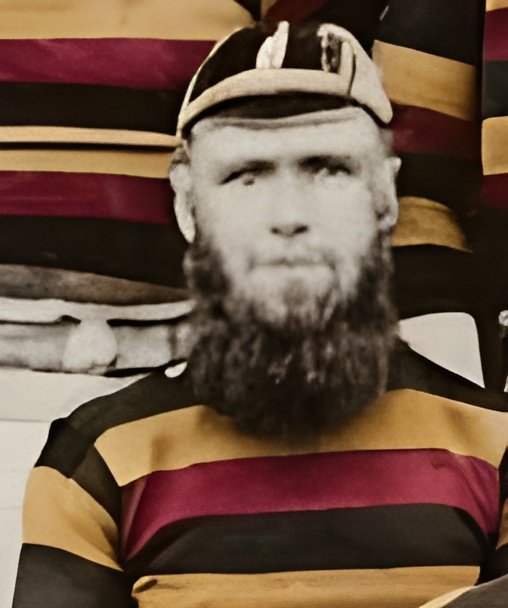
Brown was out of football for more than two years until he felt safe to return in the back half of the 1874 season. He reclaimed the captaincy role until retiring at the end of 1875.
The story of Captain Tom Brown’s broken leg and the Governor’s Door has endured as a foundational piece of Wallaroo folklore and a snapshot of the pioneering days of Rugby in New South Wales—a classic tale of courage, improvisation, and mateship.
* The exact field within today’s Parramatta Park is not known. Any location near the river is unlikely given the risk of losing the valuable Rugby ball. The present-day Old King’s Oval did not yet exist, and if the enclosed Parramatta Cricket Ground (now Cumberland Oval / Parramatta Stadium) had been used, it surely would have been mentioned. The most likely location was the fields to the west of old Government House or possibly the area immediately adjoining its south-facing wall. The football writer in The Sydney Mail of 27 June 1874 recorded that “I strolled through the Domain to the top of the hill, where I found the football ground – a very fair one”.
** The old field goal was banned by the RFU in 1905. The NSWRU duly followed. Less than a handful of such goals were gained in Sydney first grade Rugby over the 1870s to 1905. The most widely seen instance, and the only known one in inter-state matches, was a goal kicked by Queensland forward J. Patterson against NSW in front of 12,000 spectators at the SCG on 28 June 1894. Patterson kicked the ball between the goal posts at the southern end of the ground.
*** William ‘Gurry’ Burkitt – a master at The King’s School in Parramatta since 1870. Educated at Trinity College, Dublin, he initially went to the Ballarat gold diggings before arriving in Sydney. Contrary to legend, he was not one of the Wallaroo club founders in 1870. He was however a very important figure on and off the field for Wallaroo once he joined in 1872 after the above King’s game. Burkitt played for and was a club official for Wallaroo until 1886 when he went to England for a few years. At his send-off Burkitt was given life membership of the Wallaroo FC. Upon returning to NSW he again took up a committee role at Wallaroo. Obituary > link
WallarooFC1870.com – All website text & content © Sean Fagan
[ site homepage ]
