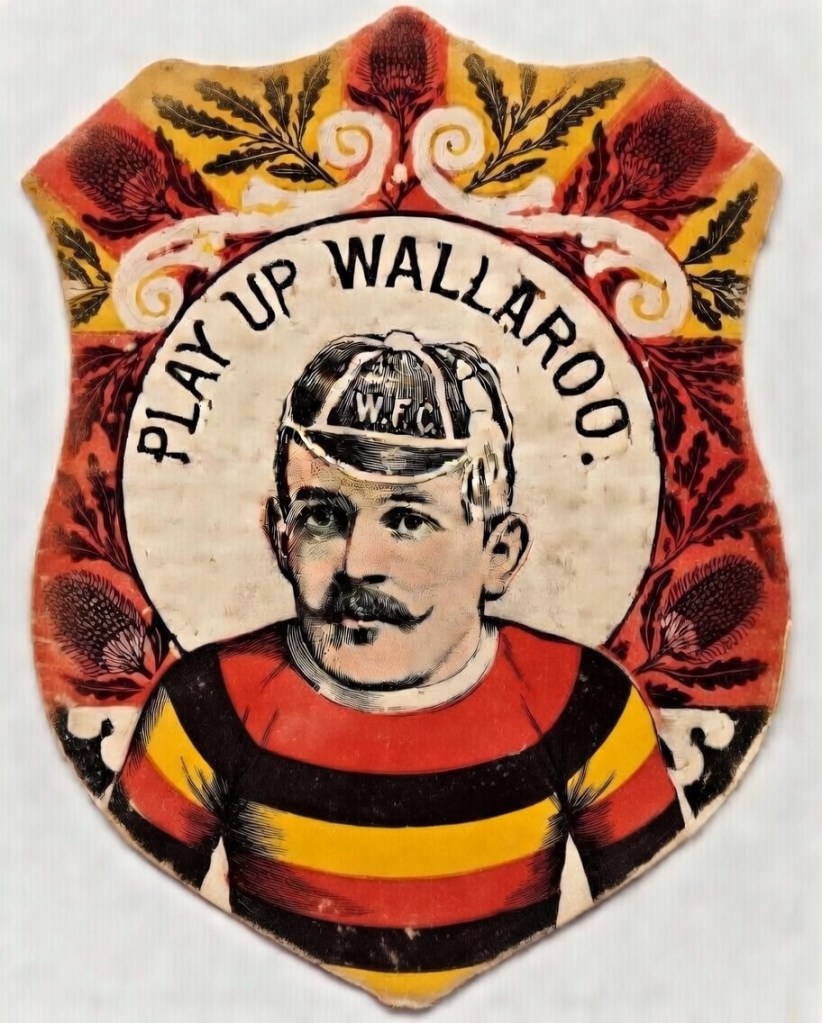
Per the record books, the First Wallabies played Test matches in 1899. But Australia wasn’t a nation yet and really, in that first barnstorming series against the British Lions, it was Banger’s Wallaroos.
“Wallaroo FC’s honour roll of seven Australian Test representatives against the 1899 British Lions still today stands as an all-time record for a single club in a Wallabies home series—a towering testament to Australia’s founding Rugby club.”
Banger’s Wallaroos: The True Story of the “First Wallabies” and the 1899 British Lions Series
Long before the iconic Australian gold jersey existed—and nine years before the “Wallabies” nickname was coined on the 1908 tour of Great Britain—Australia’s Test match history began on a Saturday afternoon at the Sydney Cricket Ground. At the centre of it all, quite literally, was Wallaroo centre three-quarter Frank “Banger” Row.
On June 24, 1899, a colonial composite XV ran out against the Reverend Matthew Mullineux’s touring squad in what became a four-Test series: three Tests in Sydney and one in Brisbane. Modern Rugby record books retrospectively fold these pioneers into the Wallabies lineage, yet on the ground in the winter of 1899, nobody called them Wallabies, and there was nothing unified or “national” about how the side was put together.
The visitors’ identity was just as fluid. Officially the “Anglo-Australian Rugby Football Team,” they were variously reported in the local press as “Mr Mullineux’s team of English players,” “England,” or simply “the British team”—with only the occasional poetic nod to the “British Lion” decades before the Lions nickname was formally adopted.
Why Did the First Australian Rugby Team Wear Blue Jerseys?
Anyone searching for the first Wallabies game or why the Wallabies wore blue in 1899 runs straight into a quirk of pre-Federation Australian sport. There was no single national jersey yet, nor a permanent national selection panel.
As late as May 1899, the tour schedule only listed two Tests against Australia: the opener in Sydney on June 24 and the second in Brisbane on July 22. What became the third Test (August 5) and fourth Test (August 12) in Sydney were originally announced as being against New Zealand and then an “Australasia” combined side. When the New Zealand Rugby Union declined to send a team across the Tasman, the schedule expanded into four Tests against Australia.
For each Test, a three-man joint NSWRU–QRU selection committee handled the picks, with the host Union holding two of the three votes. Players from across the border were invited into contention, but the visiting Union never outnumbered the home side.
Crucially, the NSWRU and QRU agreed that the team would wear “the colours of the colony in which the match is to be played… with the substitution of the (Coat of) Arms of Australia as a distinctive badge instead of the colony.”
That single rule explains why Australia’s first Test side (now Wallabies) filed out through the SCG Members Stand gate behind captain Frank Row wearing the sky blue jerseys of New South Wales—and why they wore maroon when the series shifted north to Brisbane.
Why They Are Remembered as “Banger’s Wallaroos”
Frank “Banger” Row had already claimed his first NSW cap in 1895 at just eighteen. Even though he wasn’t Wallaroo club captain—that was tightly held by veteran Percy “Paddy” Lane—when the first Australian squad assembled, they elected Row to lead the side into the First Test.
Just as cricket history remembers old England teams as Dr Grace’s XI, this foundational four-match campaign deserves to be remembered as Banger’s Wallaroos Series—the matches that launched Australian Test rugby and the Wallabies—built around the finest club side of the colonial era.
Unsurprisingly, the selectors opted for an all-Wallaroo three-quarter line in this first Australian team, pairing the experienced Charles White and the new sensation Stephen Spragg on the wings alongside Row at centre (in those days, Sydney sides typically deployed three three-quarters and two five-eighths). Wallaroo forward Alfred Kelly also packed down in the forwards.
While room was generously found for six Queenslanders in the starting XV, choosing the Wallaroo backs was serious business—the British had in their array the Welsh “Prince of Three-Quarters” star, Gwyn Nicholls.
Banger’s Wallaroo vs England
That winter, Sydney club rugby belonged to Wallaroo Football Club. Stacked with representative talent, the Marsupials tore through the 1899 premiership—winning 12 of their 13 matches—so decisively that they were declared premiers before the season’s final rounds and trophy competitions wrapped up. Founded in 1870, the club added another chapter to its long reign at the top of Sydney Rugby.
The First Test at the SCG felt like a watershed moment for the code. The Referee captured the scene:
“It was a great day, the weather being beautiful. The attendance was 28,000, and the proceeds of the match about £1,200, both records for rugby football in Australia. The aspect of the ground (the SCG) was extremely pretty, the stands being one vast array of varied colouring.”
The home side led 3-0 at half-time after a try by Wallaroo forward Alfred Kelly. Chasing up a team mate’s failed attempt at drop-goal, Kelly bowled over the British fullback and collected the loose ball to race away into the record book’s as the first ever try scorer.
Anchored by Row’s gritty defence and ignited by Spragg’s running and kicking, Australia stunned the tourists 13–3. After a tight battle, two late tries put the result beyond doubt as the British forwards faded in the closing stages, with superior possession and sharper tactical variation carrying the home side.
The Cumberland Argus and Fruitgrowers Advocate, 28 June 1899:
“The sporting world of Australia rejoiced exceedingly on Saturday afternoon last; when the news was flashed throughout the colonies that combined Australia had once more bowled over the British Lion—this time at Rugby football. The match was one which will be remembered long by those who had the good fortune to see it. Australia scored first, gaining three points through a try which Kelly secured, after brilliant following-up on the part of the New South Wales forwards.”
Selection Folly in Brisbane and a Tight Finish
Instead of backing a winning combination, the QRU-heavy selection panel tore the side apart for the Second Test in Brisbane—even as observers warned that the tourists were growing more cohesive with every fixture. Nine Queenslanders were picked, and almost every Wallaroo—including captain Row—was dropped, leaving Spragg as the sole survivor. Wearing maroon in Brisbane, Australia went scoreless in an 11–0 defeat.
Row returned as skipper for the final two Tests back in Sydney, yet the momentum had shifted. Two tries by Spragg—both of which he converted—were not quite enough as the British edged a thriller 11–10 in the Third Test. The tourists closed out the series with a 13–0 victory in the Fourth Test to take the rubber 3–1. Along the way, Wallaroo’s Ignatius “Iggy” O’Donnell, William “Bill” Webb and John “Jack” O’Donnell all earned their place in the story.
The Wallaroo Roll of Honour
Though the British Isles took the series 3–1, the 1899 campaign cemented the legacy of Australia’s original rugby club. Seven Wallaroo Football Club men earned Test caps across the four matches, forming the undeniable backbone of Australia’s very first national team:
Wallaroo’s influence ran through the entire series. The club supplied the captain for three of the four Tests and a remarkable number of players:
- Frank Row (Wallaroo) — 1st, 3rd & 4th Tests (captain)
- Stephen “Lonnie” Spragg (Wallaroo) — all four Tests
- Alfred Kelly (Wallaroo) — 1st Test
- Charles White (Wallaroo) — 1st Test
- Ignatius O’Donnell (Wallaroo) — 3rd & 4th Tests
- William Webb (Wallaroo) — 3rd & 4th Tests
- John O’Donnell (Wallaroo) — 4th Test
When Frank Row, Lonnie Spragg, Iggy O’Donnell, Bill Webb and Jack O’Donnell all started together in the Fourth Test on August 12, 1899, five players from a single club took the field in an Australian Test XV—a single-Test club representation mark that stood until Randwick’s golden era in the late 1980s and early 1990s.
Across the full four-Test home series, seven current Wallaroo players featured—still a benchmark for a single club in an Australian home Test series.
The first Australian captain (Row), the first Australian try-scorer (Kelly), and the first Australian place-kicked goal (Spragg).
This was Banger’s Wallaroos Series.
MARSUPIALS ALL
The honour caps of the 1899 British Lions tourists in Australia replicated the same marsupial layout and style of the Wallaroo FC caps, replacing the left-facing wallaroo and W·F·C, with a right-facing kangaroo and A·A·R·F·T (the ‘Anglo Australian Rugby Football Team’).
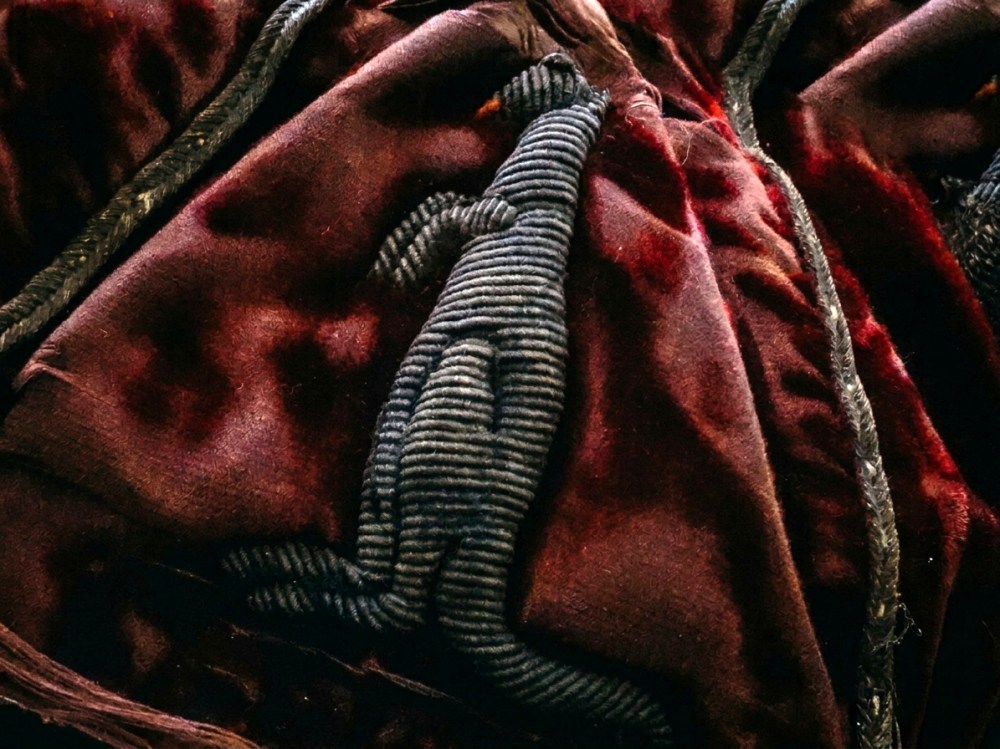
“Wallaroo FC’s five starters in the Australian team in the fourth Test against the 1899 British Lions set a Wallabies record that stood unrivaled until Randwick’s golden era of the late 1980s.”
WallarooFC1870.com – All website text & content © Sean Fagan
[ site homepage ]
