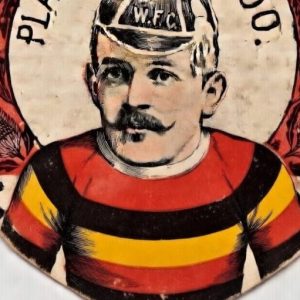
It was the oddest Rugby goal ever witnessed in the NSW colony. The ball fell to earth in front of the Wallaroo posts, struck the ground, then bounced merrily over the crossbar. Did it count? This is the story of how one errant-minded football and the Rugby-disciples of the Wallaroo FC founded today’s NSWRU.
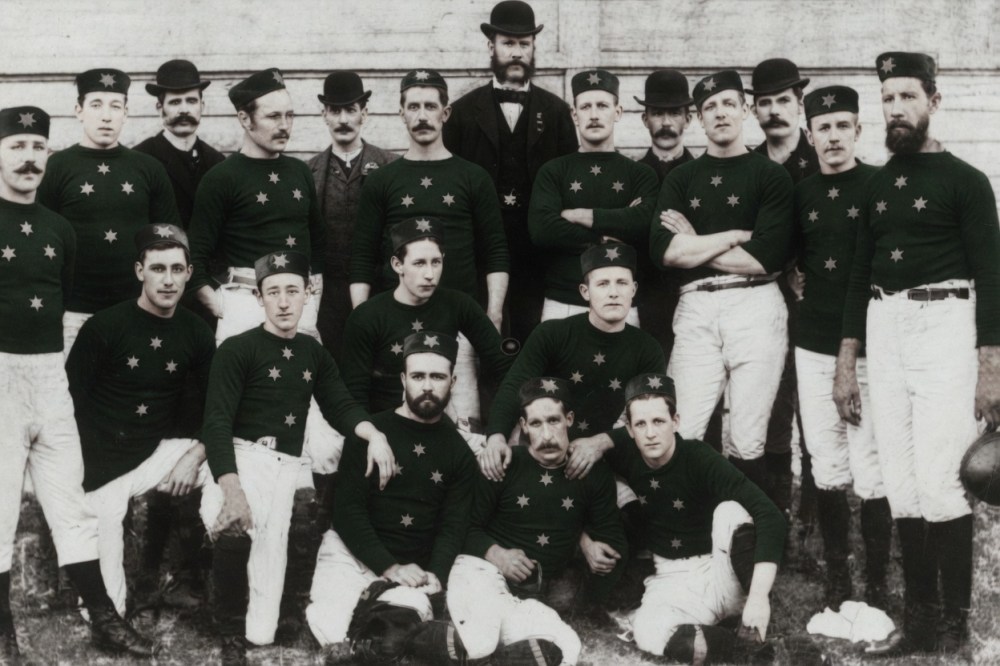
“In 1874 Wallaroo’s ‘Monty’ Arnold called representatives from clubs then existing, and formed the first union in the Southern Hemisphere. Arnold always fought strenuously for the adoption, word for word, of the code of the English Rugby Union, to make the game a national one as cricket is under the Marylebone Rules, and fortunately his counsels prevailed.”
A BEASTLY MAULING & CHRISTMAS PUDDING
In the early 1870s, Wallaroo FC had already achieved something remarkable. The club had encouraged new teams to form and helped establish Rugby as the dominant code across the colony.
Yet the game remained a wild, untamed beast.
It was undeniably a manly sport. However, every club played by its own private interpretation of Rugby School rules. The spirit of the old English game burned strong, but the “recipes” differed wildly — some as thin as weak tea, others as thick as Christmas pudding laced with rum. One side’s fair tackle was another’s beastly mauling.
Even Wallaroo’s own club rules carried a telling warning for new members and opposition teams: throttling and choking a man, even on a Rugby field, would not be tolerated. That single note tells you everything you need to know about the state of play.
By 1874, more than a dozen clubs were scattered across the colony. All claimed to play Rugby, yet each marched to its own drum. For example, in August 1872 the recently formed Goulburn FC copied the rules of Sydney University FC, consulted the rules of the Wallaroo FC, and then arrived at their own version to meet “the requirements of the ‘young club’.”
Matches frequently descended into disputes, heated arguments, and even walk-offs. It was “wordy warfare ” as the team with the best debater, Rugby School experience or most threatening oaths had the advantage.
The sheer complexity of the varying rules, along with the injuries and bruises, gave critics plenty of ammunition.
BLACK EYES ON COLLINS STREET
Lurking in the background were the advocates of Melbourne rules. Their game had so few regulations they could be on a piece of paper nailed to a tree or pasted to a wall. Players could learn them by rote and recite them in chorus before stepping onto the field.
Melbourne newspapers, never known for delicate manners, declared their code stood in relation to Rugby as a Sunday-school picnic stands to a bullfight. There was more than a grain of truth in the jab. One of the Melbourne founders openly admitted the rules had been created mainly so that “Black eyes don’t look so well in Collins Street.”
In Sydney, a correspondent to Town and Country Journal in August 1871 asked for the football rules to be printed in the newspaper, and was met with:
“Answers to Correspondents.
‘Jay.’ – We cannot afford room to print the rules of foot-ball. Send to a booksellers, and get the ‘Rugby rules’.”
While Victoria had, from its point of view, in 1859 civilised and simplified the Rugby School football laws, with the Melbourne FC replacing them with a much lighter set of rules (ten clauses in lieu of thirty-three), Sydney now faced the same challenge.
LET ALL THE CLUBS SEND DELEGATES
28 April 1874
At their 1874 annual meeting on 28 April, Wallaroo club captain and co-founder Richard Arnold stood up and proposed a clear solution: let all the clubs send delegates to a rules conference. There, they would hammer out one unified code under which every match would thereafter be played.
As reported in The Sydney Mail of 2 May 1874:
“Your committee having in view the confusion and consequent annoyance caused by two clubs meeting, who play under different rules, would bring under your notice the desirability of a scheme for amalgamating in one code the playing rules of the various clubs…”
The call was sensible. The call was overdue.
And, as was often the case in Rugby matters at the time, the Arnold brothers — Richard and ‘Monty’ — already had their game plan clearly mapped out. This time it was openly revealed in print in the city newspapers:
“The desirability of adopting one code of rules (such as the Rugby Union code in England) was discussed by the meeting, and power was vested in the committee to call a meeting of delegates to decide upon a set of rules, to guide all the clubs.”
Wallaroo FC wasted no time. Invitations were sent, and the conference was scheduled for Friday evening, 5 June 1874, at the Oxford Hotel in the city.*
WHAT IS “RUGBY UNION”?
30 May 1874
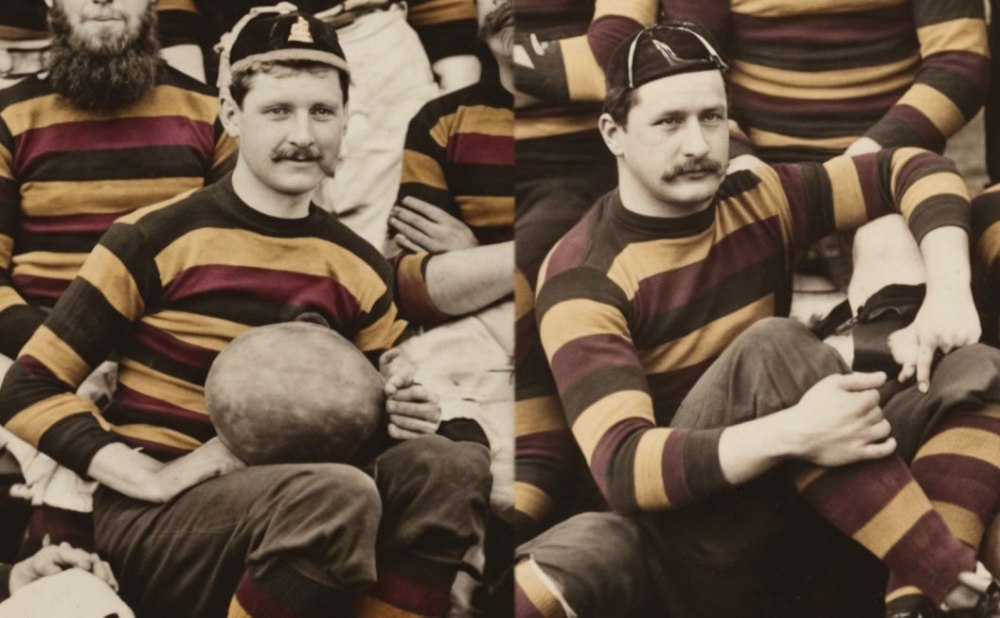
When Wallaroo FC was founded in 1870, there was no “Rugby Union” and no official code.
It was not until mid-1871 that the Rugby Football Union (RFU) was established in London and published its first set of laws. So when Richard Arnold spoke of adopting the “Rugby Union code in England” in April 1874, the phrase was still brand new in Sydney.
In fact, it was only the second time the phrase “rugby union” had ever appeared in the city’s newspapers. A year earlier, in May 1873, Sydney’s Evening News had reproduced a report from London that captured the excitement:
“Year after year the game of football is becoming more and more popular; and the innumerable clubs which have sprung up, claiming some move or less distinct affiliation to the famous Rugby Union in the matter of rules and traditions…”
Then, at just the right moment, on 30 May 1874, The Sydney Mail published a detailed explanatory article. Clearly written by someone with direct knowledge of English football, it declared that the RFU had four times as many players as the Football Association (soccer) and that Rugby Union rules were by far the most widely used.
The message was clear: linking themselves to the RFU brought instant validity and prestige.
Why couldn’t the football clubs of Sydney and the country towns do the same?
THE FIRST MEETING — WHERE THE NSWRU WAS BORN
5 June 1874
On Friday evening, 5 June 1874, at the Oxford Hotel in Sydney, the pioneers answered the call of the Wallaroo FC and took the decisive first step in founding what today is the New South Wales Rugby Union (NSWRU).
Delegates from eight clubs gathered: Wallaroo, Goulburn, Waratah, Balmain, St. Leonards, The King’s School, Camden College, and Newington College.**
This was the inaugural conference that set the entire process in motion—the meeting that would lead directly to the creation of the Southern Rugby Football Union (SRFU), the first governing body of its kind in the Southern Hemisphere.
The meeting was chaired by William ‘Gurry’ Burkitt — a master at The King’s School and a popular Wallaroo footballer who was regularly elected to chair the club’s meetings. Conspicuous by their absence, however, were the Sydney University players.
Instead of sending a delegate, they dispatched a polite letter explaining that they had not yet held their annual meeting and had therefore elected no representative. They asked the entire colony to kindly wait until the scholars could get organised.
It was a classic schoolboy “late note” excuse campaign. While practical men from Wallaroo and clubs across the colony were ready to carve out history at the Oxford Hotel, the University fellows were apparently too deep in their lounge-room logarithms to notice that winter had arrived and the football season was already underway.
In what was awfully poor form by the University club, rather than going directly to the Wallaroo FC (the conveners weeks earlier), they had waited until the meeting was underway to seek a postponement. Yet faraway Goulburn had managed to be present. It was an absence that ought to rank in Rugby lore alongside London’s most famous 1871 no-shows, Wasps FC.
The real work of preparing and drafting documents had already been done by the Wallaroo club well before the meeting on 5 June. The Union could easily have been formed that night, and Wallaroo and the other attending clubs had every right to proceed without the University club present.
In a mark of greater courtesy than the London clubs had extended to the absent Wasps, the Sydney meeting agreed to adjourn until 22 June so the University club could attend.
But the spark had already been lit. This gathering at the Oxford Hotel is the true anniversary and beginning of organised Rugby Union in NSW.
A WAYWARD FOOTBALL
20 June 1874
By Saturday 20 June, the season was in full roar.
Wallaroo faced The King’s School on The Domain at Parramatta in a match that ended in glorious confusion. After a strong rally, King’s drove the ball forward and launched two drop-kicks at goal — both missed. On the third attempt, the ball landed short, struck the hard ground, and bounced sharply over the crossbar. King’s claimed the goal and the match. Wallaroo disputed it hotly.
As The Sydney Mail reported on 11 July 1874:
“…the goal claimed by the King’s School in the late match with the Wallaroos. The ball was not kicked clean from the ground over the cross-piece but lodged in front, and then bounded over. The captain of the school team saw no difficulty in scoring the kick; but, according to the Rugby rules, adopted by the Wallaroo Club, it was no goal.”
There in the mud and cold stood the Arnold brothers — Richard, captain of the Wallaroos, and Monty — arguing against their own clubmate William ‘Gurry’ Burkitt, who was captaining the schoolboys that day. Three committed Wallaroo men were left debating whether a ball that kissed the ground on its way over the bar could count as a goal.
It was a comical, vexing muddle. Every footballer on the field knew it need never have happened if University had not dawdled.***

RUGBY “IN GLOBO”
22 June 1874
When the club delegates reconvened on Monday 22 June, a University representative finally joined them. But Monty Arnold was not about to let the latecomers rewrite the script.
Arnold’s and the Wallaroo club’s flawless preparation stood in stark contrast to the passive compliance of the room. Though he remained perfectly polite, the other delegates were there merely to offer their obedient agreement. If they had arrived with any thoughts of competing proposals, counter-arguments, or haggling over their own quirky local rules, Arnold instantly seized control of the room.
As reported in the Evening News of 4 July 1874:
“Mr. Burkitt (Kings School) having taken the chair, it was resolved on motion of Mr. Arnold (Wallaroo) seconded by Mr. Gibbes (Camden College) that a Union be formed to be called the ‘Southern Rugby Football Union’…”
The purpose was clear: enforce uniform rules, settle disputes, and act for football as the NSW Cricket Association did for cricket. The by-laws—already drafted by Arnold and ready to go—were considered and passed with staggering speed.
Then, swift as a card sharp, Arnold delivered the decisive blow. He moved that the clubs adopt the RFU’s laws in their entirety—without alteration:
“Mr. Arnold then moved—’That the Rugby Union code of rules be adopted in globo as the rules by which the clubs represented at the conference and hereafter joining the Union shall play.’ Mr. W. Riley (Goulburn) seconded the motion, and after some discussion of a conversational character it was carried unanimously.”
The entire execution was over almost as soon as it had begun. In a matter of minutes, Arnold’s swift, calculated maneuvering had locked every club—present and future—into proper Rugby Union rules. By forcing a vote for the Union first and adopting the full RFU code second, the delegates unwittingly closed the door on any chance for their own backyard variations.
Any attempt to debate the rules line-by-line might well have led to frustration and opened the way for Melbourne rules to creep in. Instead, Arnold’s moves had locked in the Rugby Union code for the clubs. There would not be a NSW “game of our own,” nor could the clubs use the RFU laws as a canvas for the creation of another rugby-variant game, as the Americans and Canadians would soon do.****
The role of the other clubs in the founding of the SRFU was limited to work on drafting explanatory notes for the RFU’s fifty-nine laws.
RULES MADE CLEAR TO EVEN THE DULLEST
25 June to 6 July 1874
Over the following weeks, the delegates from the nine clubs met repeatedly—from 25 June through to 6 July. Meeting by meeting, they worked through the RFU laws. They added clear local explanatory notes to remove any doubt or confusion. The goal was simple: make the rules completely understandable to everyone.
As The Sydney Mail excitedly reported on 11 July 1874:
“Rugby Football Rules have been taken to regulate the game here, and explanatory notes have been added, so that everything may be rendered clear, even to the dullest comprehension.”
RUGBY LAWS CONFIRMED
24 July 1874
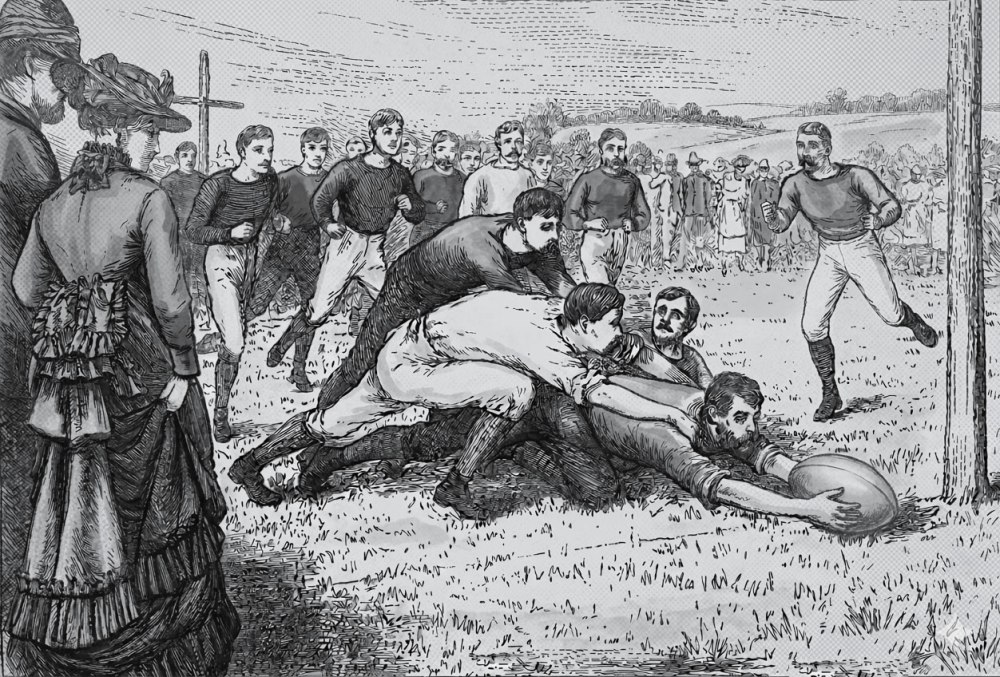
On 24 July, the delegates gathered once more at the Oxford Hotel. Richard Arnold (Wallaroo) chaired the meeting, joined by representatives from Newington, Waratah, Balmain and University. Goulburn sent an apology, while Arnold noted he had also been appointed as delegate for Mudgee — handy insurance if extra votes were ever needed.
As reported in The Sydney Morning Herald the following day:
“FOOTBALL CONFERENCE. — An adjourned meeting of football delegates was held last evening at the Oxford Hotel. Mr. R. Arnold, of the Wallaroo Football Club, occupied the chair… explained that the object of the meeting was to confirm the by-laws of the “Southern Rugby Football Union,” and the laws of the game of football as adopted (from the rules of the Rugby Club) [i.e. RFU] at a conference of delegates. The laws and regulations were considered, and after some discussion, confirmed and adopted.”
One important by-law stated that member clubs could only play matches under the new adopted rules, and only against other member clubs. This raised eyebrows among some country clubs, but Arnold had a straightforward answer: any club outside the Union could show good manners and simply join.
THE UNION TAKES OFFICE
28 July 1874
On 28 July, the inaugural general meeting filled the long dining room at the Oxford Hotel.
University, true to form, sent two beardless youths — and only one of them actually turned up. The other clubs present were Wallaroo, Goulburn, Waratah, Balmain, The King’s School, Newington College, Camden College, Mudgee, and Victoria (South Sydney).**
The meeting elected the first office-bearers of the SRFU. Wallaroo men featured prominently: Richard Arnold was appointed secretary and treasurer, while the ever-popular Tom Brown became vice-president.
It was not all smooth sailing. In July 1874, The Sydney Mail grumbled that fifty-nine rules were a heavy load for any man to carry in the heat of battle. Yet by May 1876, the same newspaper happily reported that no one wished to change a single line. Common sense had triumphed (although the columnist himself was never convinced).
“I have obtained a copy of of the Victorian rules, which will be found published elsewhere. They are remarkably simple, and may readily be committed to memory, an advantage which cannot be credited to the 59 articles of the Rugby creed.”
— ‘Leatherstocking’ in ‘The Sydney Mail’, 26 June 1880
WHY “SOUTHERN”?
The question has continued to be asked for the past 150 years. It was first raised by The Sydney Mail on 11 July 1874:
“I don’t understand the principle upon which the conference hit upon the title—’Southern Rugby Football Union’—except that the Rugby Rules have been adopted; but as the name has, I understand, been finally settled, we must accept it as it is.”
The following year, the first annual meeting of the SRFU provided the clearest explanation:
“The rules adopted are those of the Rugby Football Union of London. Consequently, the name of the Southern Rugby Football Union was chosen.”
— The Sydney Morning Herald, 27 April 1875
The above quote essentially pertains to the “Rugby Football Union” part of the name, not the “Southern”.
“Rugby Football Union” was non-negotiable, but they needed a geographic qualifier. “Sydney” was unsuitable because country clubs were already involved. “New South Wales Rugby Football Union” was simply too long and clumsy for the times.
Contrary to legend, and despite involving the Arnolds, the “Southern” was not a declaration of grandiose plans to conquer the Southern Hemisphere, or to serve as a governing body for football clubs across the Australian mainland and New Zealand. At most—and almost certainly inadvertently—the “Southern” is grander than “Victorian rules.”
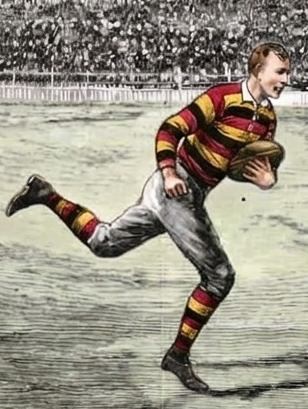
The word “Southern” was chosen for its brevity, appeal and attachment to an established NSW symbol: the Southern Cross constellation. This was demonstrated in 1883 when the NSW team, under the SRFU, debuted their first carefully designed Rugby jerseys:
“During this tour the S.R.F.U. colours were worn for the first time, viz., heather green, with the Southern Cross embroidered on the breast, with a cap of green velvet, and N.S.W. in silver monogram.”
— The Sydney Morning Herald, 29 April 1884
In the iconography of the era, the Southern Cross was already a proud colonial emblem for NSW. For a group that valued a “euphonious name” (as the Arnolds had shown when naming Wallaroo), “Southern” was the perfect single word to complete the title.
Why heather green was the adopted colour is not known. It may be speculated—in keeping with the Victorian era fondness for allegory—that the 1883 jersey design and colours were a literal representation (‘canting’) of the Southern world, namely the stars of the night sky against the sun-hazy green of the day-time landscape.
THE KINGDOM OF WALLAROO
Per a letter write to The Sydney Daily Telegraph published on 31 July 1880:
“A few years ago the brothers Arnold were ‘the Union’ … they swayed the sceptre most autocratically, and it was useless to expect anything to be done unless they were in its favour. Latterly it has advanced from an autocracy to a republic, constituted by the Wallaroo Club, of which the Messrs. Arnold are the presumed heads.”
FINAL SURVIVOR
Of the eight clubs at the 5 June 1874 meeting, none of the seven Sydney-based ones survived into the 20th century. Wallaroo lasted longest, leaving the competition after 1899 following the adoption of the district club scheme.
Before then, Camden College closed in 1877, Waratah swapped to Melbourne rules in 1882, and St. Leonards vanished in the mid-1880s.
For a time schools continued to join, including in 1876 the Oakland’s School at Mittagong under Wallaroo FC and Oxford University’s Henry Southey. But come the 1880s they were gone, and by the 1890s Newington College and The King’s School ceased playing the senior clubs and moved to schoolboy competitions. Balmain dissolved around 1890 as local interest was so strong it gave rise to numerous burrough clubs across the suburb.
The original Goulburn club was certainly defunct by the end of WWI, as the town’s loyalty until the 1950s was solely to rugby league.*****
Either way, over the 1890s all of the clubs lost their NSWRU membership by the creation of the Metropolitan Rugby Union for the city, regional branches in the country centres, and the Athletic Association of the Great Public Schools.
SINCE 1874
When you next see “Since 1874” alongside the NSW Waratahs today, remember it all began with the practical, forward-thinking men of Wallaroo FC. It was Wallaroo who issued the call, stood in the room with the other seven clubs and formally set the creation of the SRFU into motion, ironed out the chaos of conflicting rules, and handed the colony a game fit for gentlemen.
The SRFU they created was a remarkable achievement. It was only the third Rugby Union body in the world — following England (1871) and Scotland (1873) — and the first in Australia. It predated the Victorian Football Association (VFA) by three full years.
The SRFU stood the test of time. In April 1892, when the name quietly changed to the “New South Wales Rugby Football Union”, it was no rejection of the past — it was proof of Wallaroo’s success. Their vision had taken root so strongly that the modest “Southern” qualifier was no longer needed. The foundation they laid in 1874 was solid enough to carry the name of the entire colony, and later the state.
And somewhere in memory, that oddest of goals still bounces harmlessly over the crossbar — a small, comic reminder of the day when confusion finally met its match in Wallaroo grit and good colonial sense.
Just to be sure, a knowing hand had ensured the very first SRFU rule on scoring included an explanatory note:
“Note.— A ball bounding from the ground over the crossbar is no goal.”
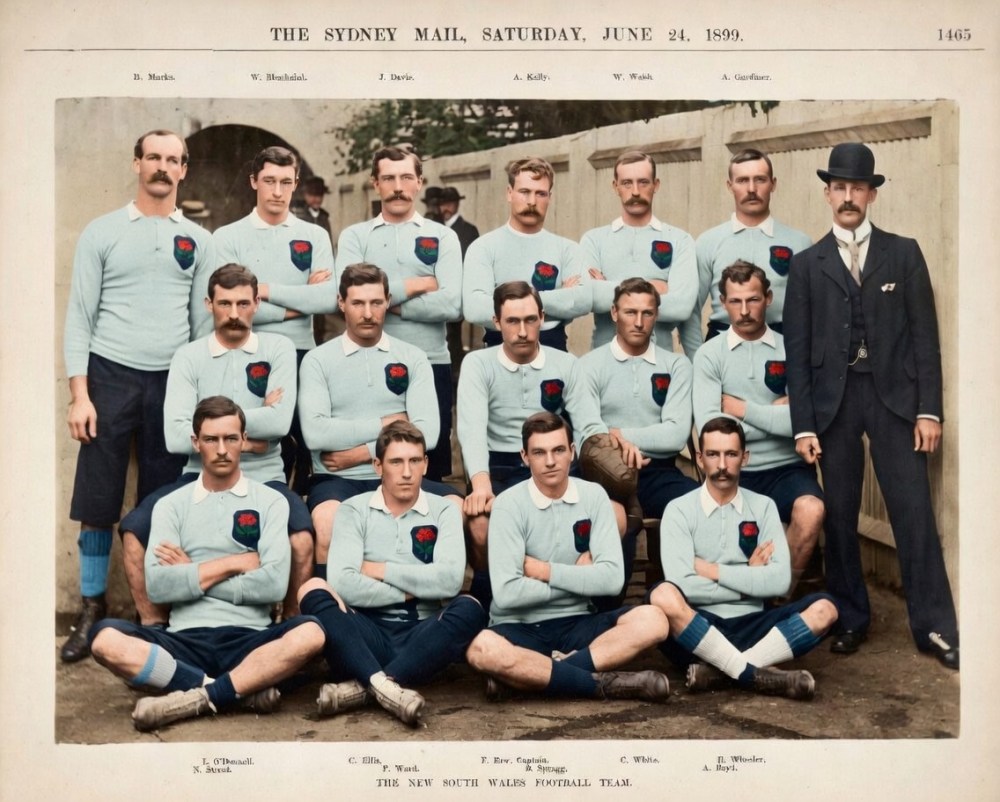
The formation of the Union was brought about by Mr. R. A. Arnold and the committee of the Wallaroo Football Club.
The first meeting to discuss new rules was held at the Oxford Hotel, on the 5th June, 1874, with Mr. W. K. F. Burkitt in the chair, and representatives from the following clubs: Wallaroo, Goulburn, Balmain, Waratah, St. Leonards, King’s School, Camden, and Newington Colleges.
Later, the University and Mudgee clubs were represented.
Five meetings were held before the new code of rules was passed.
The rules adopted are those of the Rugby Football Union of London. Consequently, the name of the Southern Rugby Football Union was chosen.
* Gannon’s Oxford Hotel was situated “at the eastern corner of Phillip and King Streets” in the city, per The Sunday Herald (Sydney, of 23 August 1953.
** Goulburn, Balmain, St. Leonards & Mudgee were member-based clubs each using the name of a country town or Sydney suburb. Waratah FC was a Sydney member-based club that had taken the name of the local native plant and later NSW emblem. The “Victoria” club was another member-based club likely named after Queen Victoria. The King’s School, Camden College and Newington College were all Sydney metropolitan based educational institutions.
*** Only the 1871 rules of the Wallaroo FC are known to exist. Per no. IV there is no mention of a bounced ball not counting, and likely Wallaroo were disputing the goal relying upon it being nonsense to say a kick of the ball can take a divergent path between the boot and the cross-bar via landing on the ground first and still count, and this reasoning accorded with their Rugby School experience and knowledge of tradition. The RFU’s laws amended in October 1873 would clearly have ended any on-field debate as they stated at no.5 that: “A Goal can only be obtained by kicking the ball from the field of play direct (i.e., without touching the ground or the dress or person of any player of either side), over the cross-bar of the opponent’s goal…”
**** This had begun on 15 May 1874, when Canada’s McGill University and the USA’s Harvard University first met in a football game played under McGill’s Rugby rules—McGill having adopted the RFU’s 1871 laws with some variations. Harvard quickly embraced these rules, as did Yale and other Eastern colleges (later known as the “Ivy League”). While football in North America began with RFU laws—the first Intercollegiate Football Association’s rules in 1876 were near verbatim those of the RFU—there was no reason administrators could not shape the game as they saw fit. Indeed, under Walter Camp in the 1880s and 1890s, they did so. By contrast, NSW adopted and kept the RFU laws without alteration. This was driven not only by the influence of Rugby School old boys such as the Arnolds, but also by a strong desire to mirror cricket and exchange tours with England (and, soon, New Zealand).
***** Located in the NSW Southern Tablelands, the town of Goulburn in the 1890s saw many new clubs formed. One of the clubs was called “the Goulburns,” as was the town’s representative team. If the original club did survive into the 20th century, it was certainly defunct by the end of WWI, as the town’s loyalty until the 1950s was solely to rugby league. The Victoria FC went defunct early in 1876. The Mudgee FC by choice or by extinction left the SRFU after the 1876 season.
NOTE: The NSWRU has not since the late 1890s been a clubs members based body. Clubs join a RU that affiliates with the NSWRU. Sydney University continues to play rugby in the city’s suburban Shute Shield competition under the Sydney Rugby Union.
WallarooFC1870.com – All website text & content © Sean Fagan
[ site homepage ]

One Comment
Comments are closed.